
Karl XIII of Sweden (1748–1818) was the last Gustavian monarch and a pivotal figure in the transition from absolutist rule to constitutional governance. His reign followed the 1809 coup, introduced the new constitution, and led to the adoption of Jean Baptiste Bernadotte — founding the dynasty that still reigns today.
👑 Part of our guide to Swedish Kings & Royal History in Stockholm.
Karl XIII of Sweden (1748–1818) was never meant to be a great reformer or conqueror. Yet his reign became one of the most decisive turning points in Swedish history. As brother of Gustav III and uncle of Gustav IV Adolf, he stood at the crossroads between absolutist monarchy and the new constitutional order that emerged after 1809.
Old, childless, and physically frail when he took the throne, Karl XIII became the king who closed the Gustavian era and opened the door to the Bernadotte dynasty — and with it, modern Sweden.
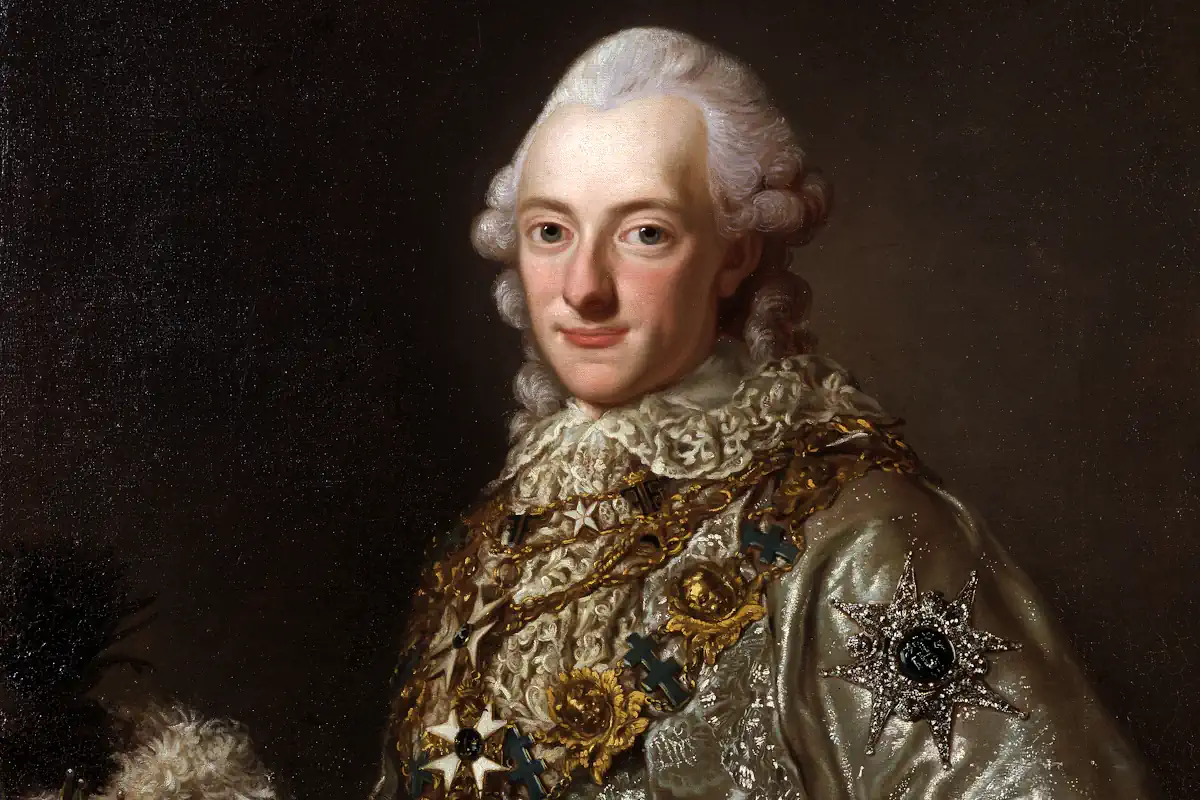
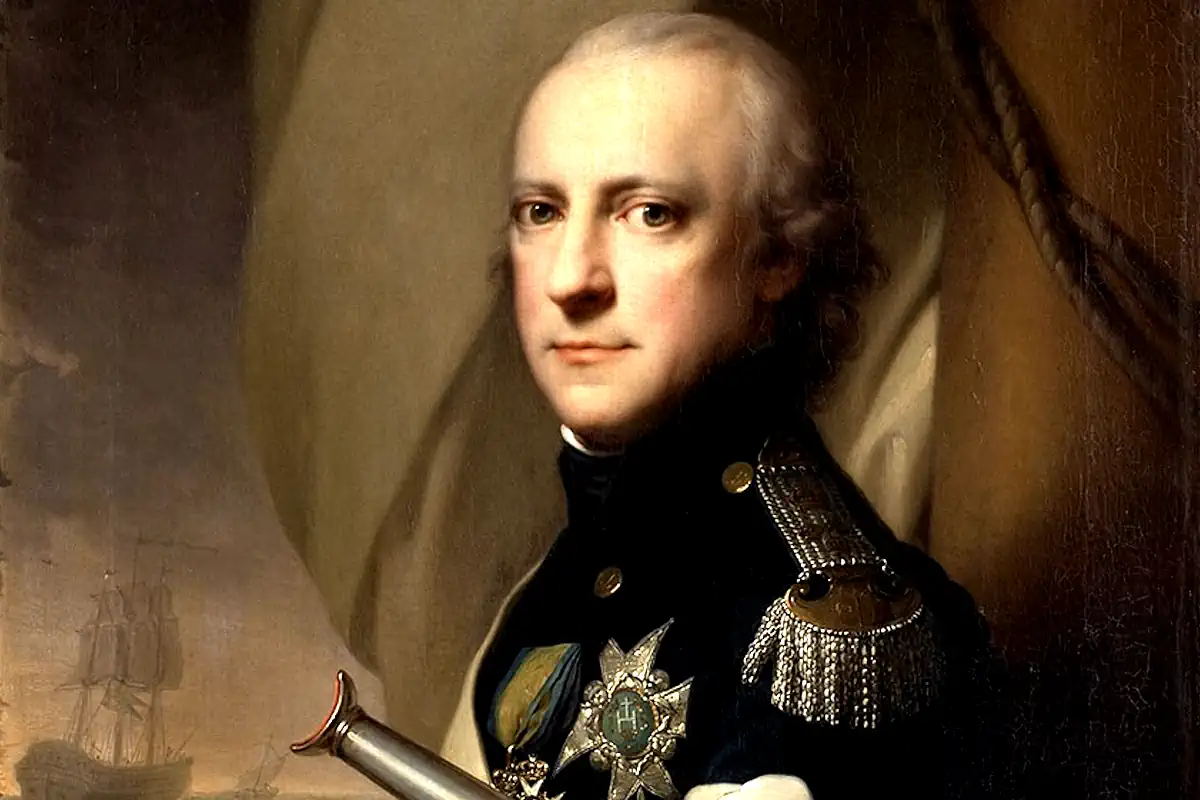
Born in 1748 as Prince Karl, he grew up in the heart of the royal court in Stockholm. His elder brother, Gustav III, would become one of Sweden’s most theatrical and influential monarchs. Karl supported Gustav III during the 1772 coup, which strengthened royal authority and introduced a form of enlightened absolutism.
While Gustav III shone on the political and cultural stage, Karl remained in the background — loyal, dutiful, and often overshadowed. Yet his proximity to power meant that he witnessed, from within the palaces of Stockholm and Drottningholm, the rise and eventual crisis of the Gustavian system.
The assassination of Gustav III in 1792 placed Karl’s nephew, Gustav IV Adolf, on the throne. Karl served as a stabilizing figure at court, but real power lay elsewhere. When Sweden lost Finland to Russia in 1809 and confidence in Gustav IV Adolf collapsed, a group of officers staged a coup at the Royal Palace in Stockholm.
Gustav IV Adolf was deposed and later forced to abdicate at Gripsholm Castle. In the aftermath, the Riksdag turned to Karl — now in his sixties and in poor health — as a compromise figure who could restore stability.
In June 1809, he was proclaimed King Karl XIII of Sweden.

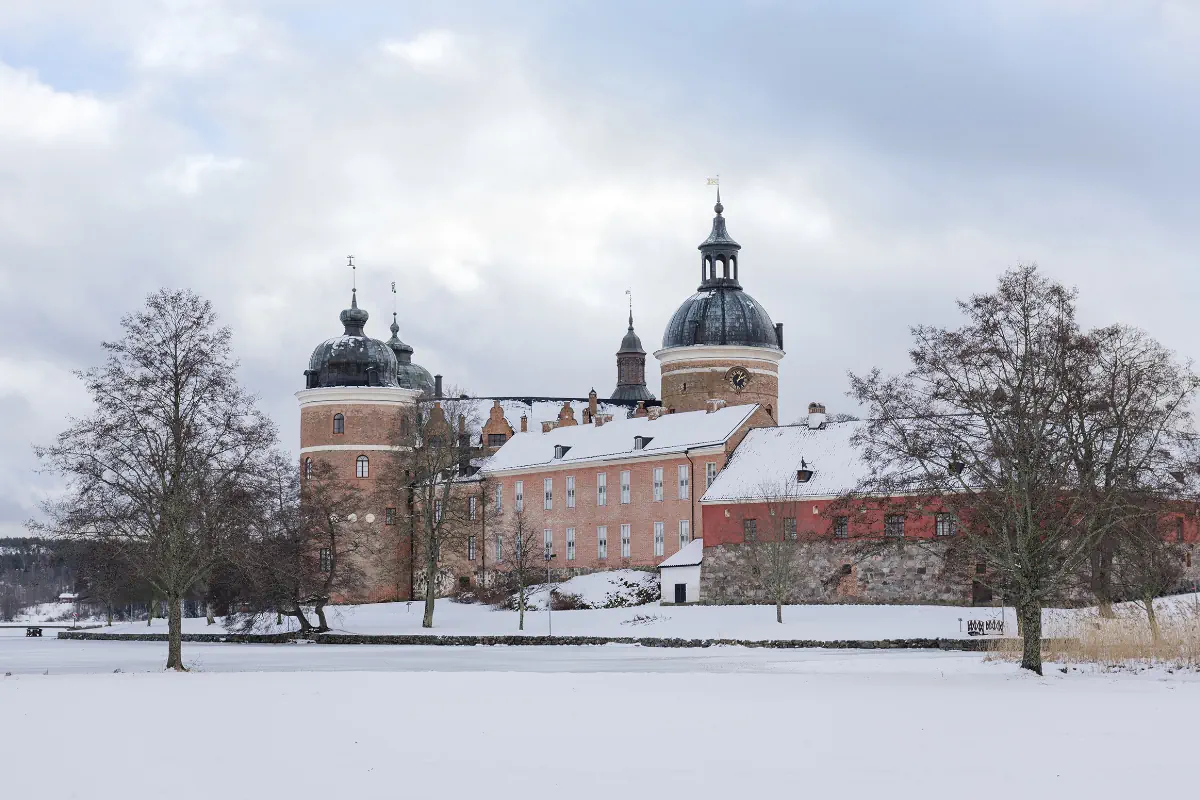
Unlike his brother Gustav III, Karl XIII ruled under strict constitutional limits. The 1809 Constitution curtailed royal authority and strengthened the role of the Riksdag and the Council of State. Karl XIII’s reign thus marked the transition from personal monarchy to a more balanced system of governance.
His own political influence was limited by age and health. Much of the real power lay with leading statesmen and the emerging constitutional framework. Yet his presence on the throne gave legitimacy to the new order — a Gustavian king presiding over a post-Gustavian system.
Karl XIII had no surviving children, and the question of succession became urgent. In 1810, the Riksdag first chose the Danish prince Karl August as heir, but his sudden death the same year forced a new decision.
The choice fell on the French marshal Jean Baptiste Bernadotte, who was adopted by Karl XIII and took the name Karl Johan. He would later become Karl XIV Johan, founder of the Bernadotte dynasty that still reigns in Sweden today.
Karl XIII’s life and reign are closely tied to Stockholm’s royal landmarks:
Karl XIII is often remembered as a weak and passive monarch, overshadowed by stronger personalities before and after him. Yet his historical role is far from insignificant. He was the last Gustavian king, the first constitutional monarch under the 1809 framework, and the ruler who paved the way for the Bernadotte dynasty.
His reign did not reshape Sweden through bold initiatives or grand reforms. Instead, his importance lies in what he represented: continuity in a time of upheaval, and a living link between the absolutist past and the constitutional future.
In this sense, Karl XIII stands as a quiet but crucial figure in Swedish history — the king between two eras, whose reign allowed the old order to end and a new one to begin.