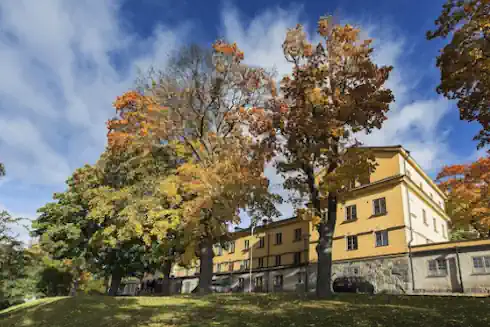

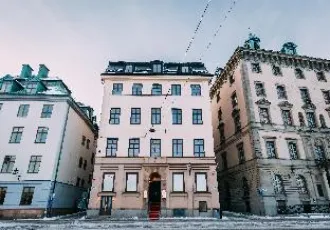
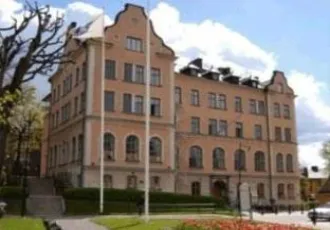

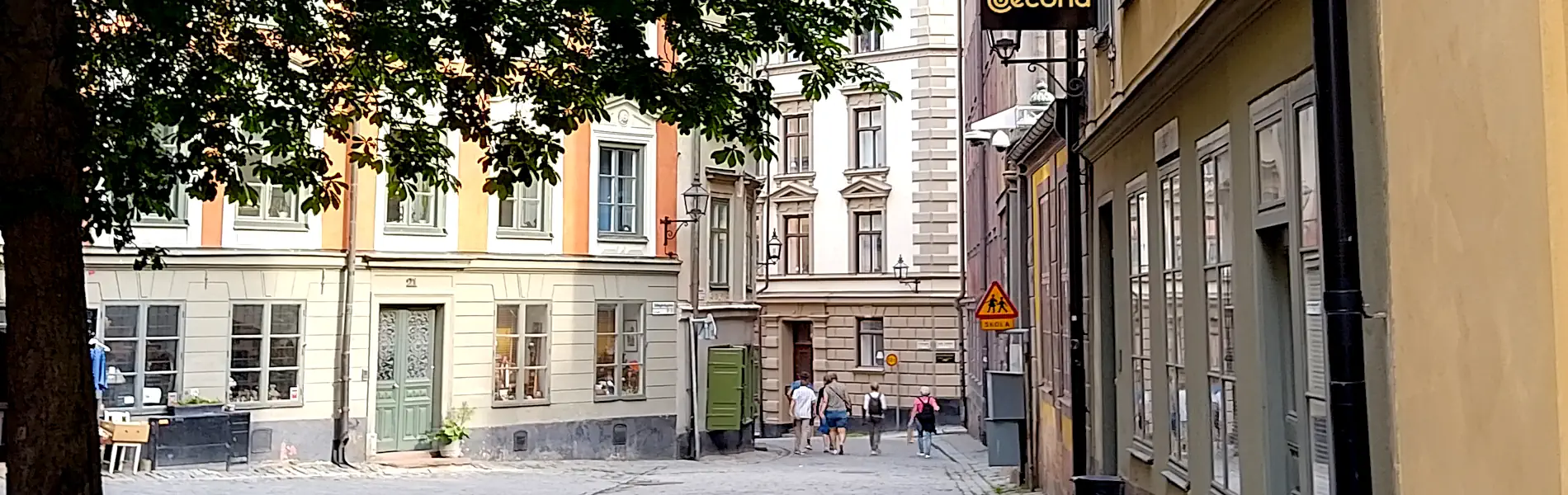
Gamla Stan is Stockholm’s medieval Old Town and the historic core where the city was founded. With its narrow cobblestone streets, colorful buildings, and major landmarks, it preserves centuries of political, cultural, and urban development.
Gamla Stan is the historic heart of Stockholm, where narrow medieval streets, colorful merchant houses, and centuries-old churches preserve the atmosphere of the city’s earliest days. The district also represents the core of medieval Stockholm, when the city grew into a powerful Baltic trading hub shaped by merchants, royal authority, and the fortress of Tre Kronor.
Located in central Stockholm on the island of Stadsholmen, this compact district emerged in the 13th century as a fortified settlement controlling the vital passage between Lake Mälaren and the Baltic Sea. From these narrow streets, trade routes expanded, monarchs ruled, rebellions ignited, and the foundations of modern Sweden were laid.
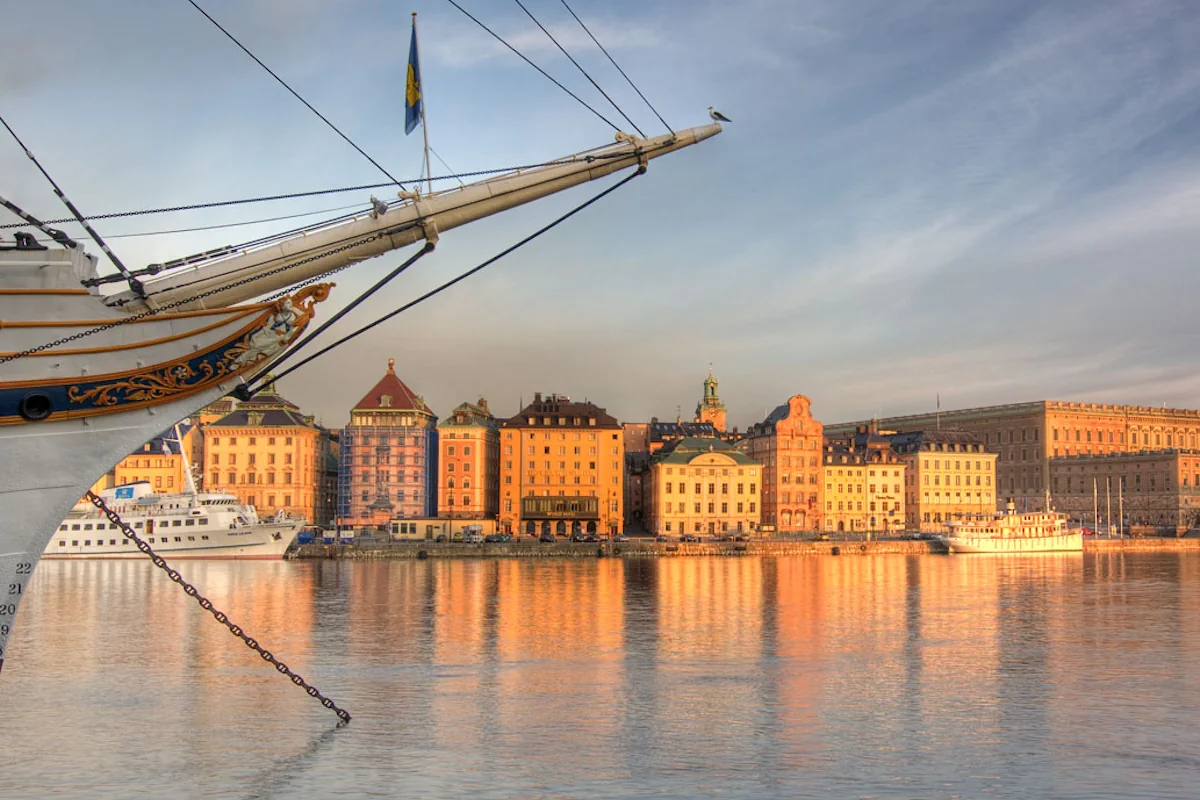
Merchants and ships arriving at the busy harbor along Skeppsbron helped transform medieval Stockholm into a major Baltic trading center.
Today, this historic district in central Stockholm, Sweden, remains one of Europe’s most remarkably preserved medieval city centers — a living historical landscape where Stockholm’s earliest chapter still unfolds in stone, brick, and water.
This strategic location highlights Stockholm’s historic waterways, including Lake Mälaren and Saltsjön, which have been crucial for trade and defense throughout the city’s history.
the vital passage between Lake Mälaren and the Baltic Sea.
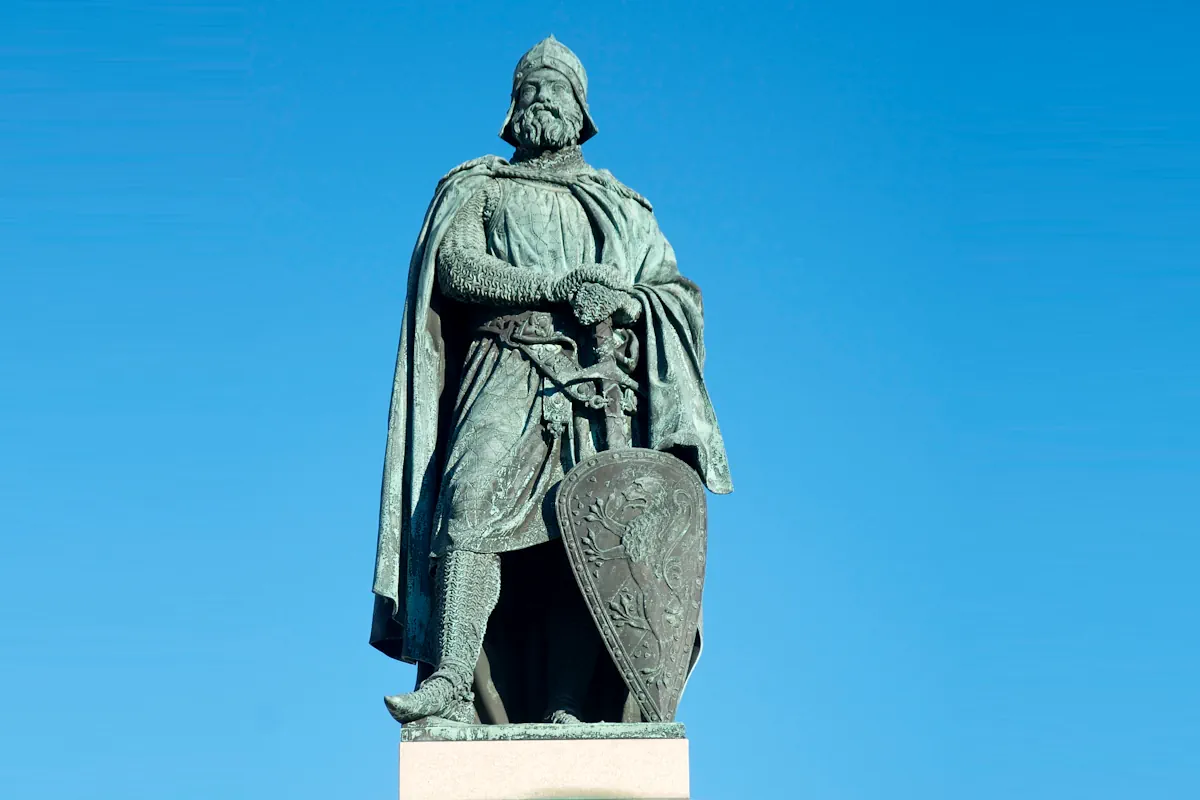
The traditional founding year of Stockholm, 1252, is closely associated with Birger Jarl, the powerful statesman who consolidated royal authority in Sweden. Establishing a fortified settlement at this narrow strait was no accident. Whoever controlled this point controlled trade flowing from the inland regions around Lake Mälaren to the Baltic Sea. The district’s origins lie in the founding of Stockholm in the 13th century, when this strategic settlement began to develop into the capital of Sweden.
Merchants traveling from German Hanseatic cities recognized its potential early. Over time, German influence shaped the city’s commercial institutions, architecture, and even language. Stockholm developed into a northern trade hub, exporting iron, copper, and timber while importing luxury goods, cloth, and salt.
Wooden structures gradually gave way to stone buildings. Defensive walls enclosed the island. Towers and gates guarded entrances. Gamla Stan transformed from a military outpost into a commercial powerhouse and political center.
By the late 15th century, Stockholm had emerged as Sweden’s political center, gradually overtaking older power bases. Its fortified island became the administrative heart of the realm, marking the transition from regional stronghold to national capital.
By the late Middle Ages, the Hanseatic League had become a dominant force in Northern European trade. For centuries, German-speaking burghers dominated municipal administration, leaving linguistic and architectural traces that still echo in Gamla Stan’s medieval fabric.
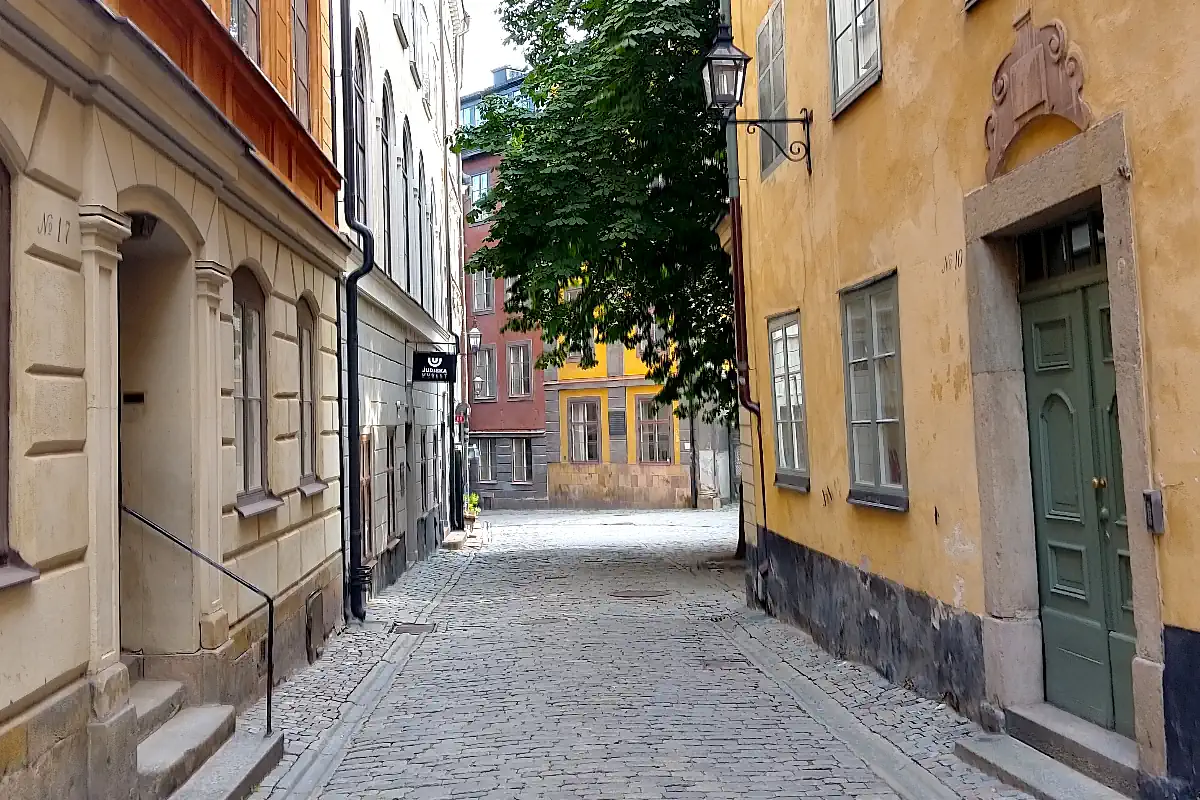
The layout of the district — narrow winding alleys opening into a central market square — reflects medieval planning principles common across the Baltic region. Streets were designed for foot traffic, horses, and small carts, not for modern vehicles. The density of buildings reveals how precious space was within the protective walls.
Remnants of medieval cellars and foundations remain beneath present-day structures, quietly preserving centuries of urban continuity.
Faith and power stood side by side in medieval Stockholm.
Stockholm Cathedral, founded in the 13th century, became the spiritual heart of the city. Here, royal weddings, coronations, and state ceremonies reinforced the connection between church and crown. Just west of the island, Riddarholmen Church later emerged as the burial place of Swedish monarchs, permanently binding the area to royal identity.
Gamla Stan forms the historic core of what is often called Royal Stockholm, the network of palaces, churches, and royal sites that shaped Sweden’s monarchy. The evolution of royal authority — from medieval coronations to the constitutional role defined under Oscar II — is deeply rooted in the ceremonial spaces of Gamla Stan. In the 19th century, Karl XV was known for riding through Gamla Stan on horseback, greeting citizens directly and strengthening his reputation as a king close to the people. The close proximity of church, fortress, and marketplace reveals the medieval worldview: governance, commerce, and faith were inseparable elements of daily life.


Many of Sweden’s most influential monarchs ruled from the Old Town, including Gustav III, his deposed son Gustav IV Adolf, and warrior kings like Karl XI and Karl XII.
Nearby Karlberg Palace, closely associated with the reigns of Karl XI and Karl XII, further illustrates how royal power radiated outward from Gamla Stan during the age of Swedish absolutism. The period also saw the influence of Queen Ulrika Eleonora the Elder, whose patronage and presence shaped the cultural and ceremonial life of the Old Town.
At the center of Gamla Stan lies Stortorget, Stockholm’s oldest square. Surrounded by colorful merchant houses, it has served for centuries as the city’s commercial and civic nucleus.
Yet Stortorget also witnessed one of the most dramatic moments in Swedish history. In November 1520, Danish King Christian II ordered the execution of Swedish nobles and clergy in what became known as the Stockholm Bloodbath. The massacre shocked the realm and ultimately fueled the rebellion that elevated Gustav Vasa to power and paved the way for an independent Swedish kingdom.
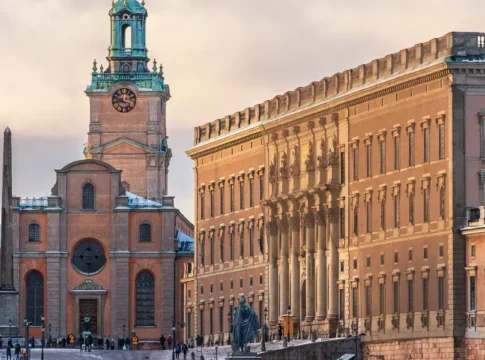
Just steps from Stortorget stands Storkyrkan, Stockholm’s cathedral and the traditional site of royal ceremonies.
Few European squares encapsulate such a profound political transformation within such a small physical space. The medieval union fractured in violence — and from that rupture emerged the sovereign Swedish kingdom.
On the northern edge of Gamla Stan stands the Royal Palace, constructed on the site of the medieval Tre Kronor fortress. The original castle symbolized Sweden’s early defensive strength and royal authority.
After a devastating fire in 1697, the medieval fortress was replaced by the current Baroque palace. Despite its architectural transformation, the strategic foundations remain unchanged. The palace continues to serve as the official residence of the Swedish monarch, maintaining a direct institutional link between medieval Stockholm and the modern state.
Beneath the palace, archaeological remains of Tre Kronor still testify to the district’s fortified origins.


Although the medieval city walls were gradually dismantled as Stockholm expanded, fragments remain embedded within later buildings. Archaeological excavations have revealed defensive structures, harbor installations, and merchant warehouses beneath modern streets.
These layers illustrate how Gamla Stan evolved organically rather than being rebuilt from scratch. Unlike many European cities devastated by war or industrial redesign, Stockholm’s medieval core survived with remarkable continuity.
The result is not a reconstructed historic quarter — but an authentic urban environment shaped across eight centuries.
Gamla Stan’s existence is inseparable from geography. To the west lies Lake Mälaren; to the east, Saltsjön and the Baltic Sea. This meeting point granted Stockholm both economic opportunity and natural defense.
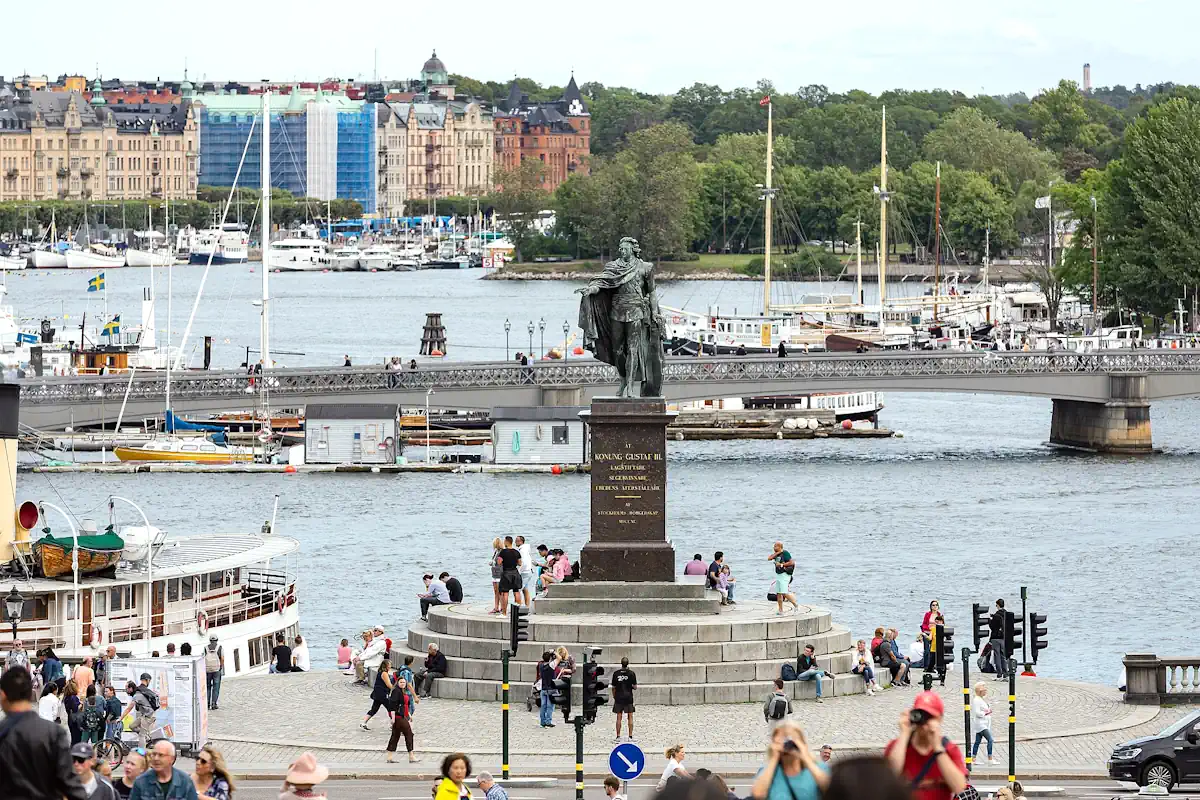
Water functioned as highway, marketplace, and protective barrier. Ships anchored along Skeppsbron carried goods to and from distant ports. Control of this maritime corridor ensured prosperity and political leverage.
Understanding Gamla Stan means understanding how geography shaped destiny — a theme explored further in Stockholm’s waterways.
Despite fires, wars, and centuries of change, Gamla Stan retains its medieval street plan. Narrow alleys such as Mårten Trotzigs Gränd — one of the narrowest streets in Stockholm — twist between tall, colorful townhouses.
Cafés, galleries, and small shops now occupy buildings that once housed merchants and craftsmen. Cellars that stored trade goods centuries ago serve modern purposes. Life continues within the same spatial framework that shaped the 13th century city.
Gamla Stan is not a museum frozen in time. It is a living neighborhood — where daily life unfolds amid preserved medieval structure.


While medieval foundations dominate, Gamla Stan also reflects later architectural periods. Renaissance and Baroque façades replaced earlier wooden structures. Decorative portals and merchant houses display the wealth accumulated during Stockholm’s rise as a European power in the 17th century.
This layered architectural identity makes Gamla Stan not only medieval, but transitional — bridging Sweden’s emergence from a regional kingdom to a major Baltic power.
By the 17th century, Gamla Stan had evolved from fortified trading post into the ceremonial and administrative core of a Baltic empire. Though Stockholm later expanded northward into Norrmalm and beyond, the medieval island remained the symbolic nucleus of Swedish authority — the place where crown, commerce, and church first intertwined.
Gamla Stan offers a rare opportunity to walk through the origins of a European capital. Within a compact island, visitors encounter royal palaces, Gothic churches, historic squares, waterfront promenades, and streets that follow a 13th-century layout.
Whether exploring Stortorget, witnessing the Changing of the Guard at the Royal Palace, stepping into Storkyrkan, or wandering along Skeppsbron at sunset, Gamla Stan remains one of Northern Europe’s most atmospheric historic districts.
Gamla Stan forms the historic core of Stockholm and occupies the island where the city was first established in the 13th century. The district preserves the urban layout of the medieval settlement that emerged during the founding of Stockholm.
Within a few minutes’ walk, visitors can explore many of Stockholm’s most historic sites:
Gamla Stan is more than a historic district — it is the foundation of Sweden’s capital. Here, trade routes were defended, monarchs crowned, rebellions ignited, and a city took shape between lake and sea.
Across the centuries, rulers from Birger Jarl to the Vasa kings, the absolutist monarchs of the 17th century, and the constitutional sovereigns of the 19th all shaped the Old Town’s enduring role as the symbolic heart of Swedish authority.
To walk through Gamla Stan is to walk through the medieval origins of Stockholm itself — where geography, commerce, faith, and royal authority converged to shape a nation.
Gamla Stan: The Medieval Heart of Stockholm
Gamla Stan: The Medieval Heart of Stockholm