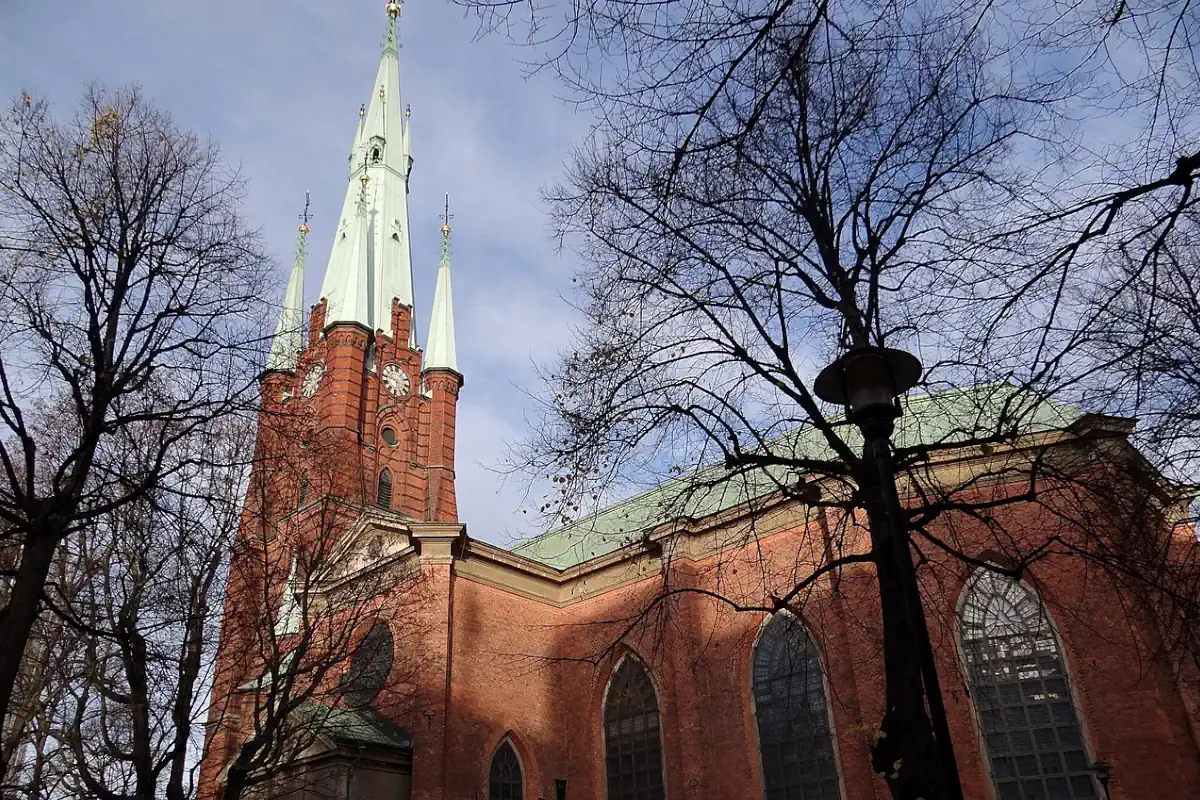
Klara Church is a Gothic Revival landmark in central Stockholm, known for its tall spire and proximity to Stockholm Central Station. Built on a medieval foundation, it combines architectural history with an active social outreach mission.
Klara Church: Skyline Landmark and Social Heart of Central Stockholm
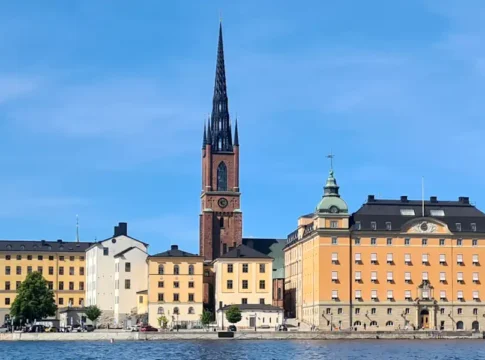
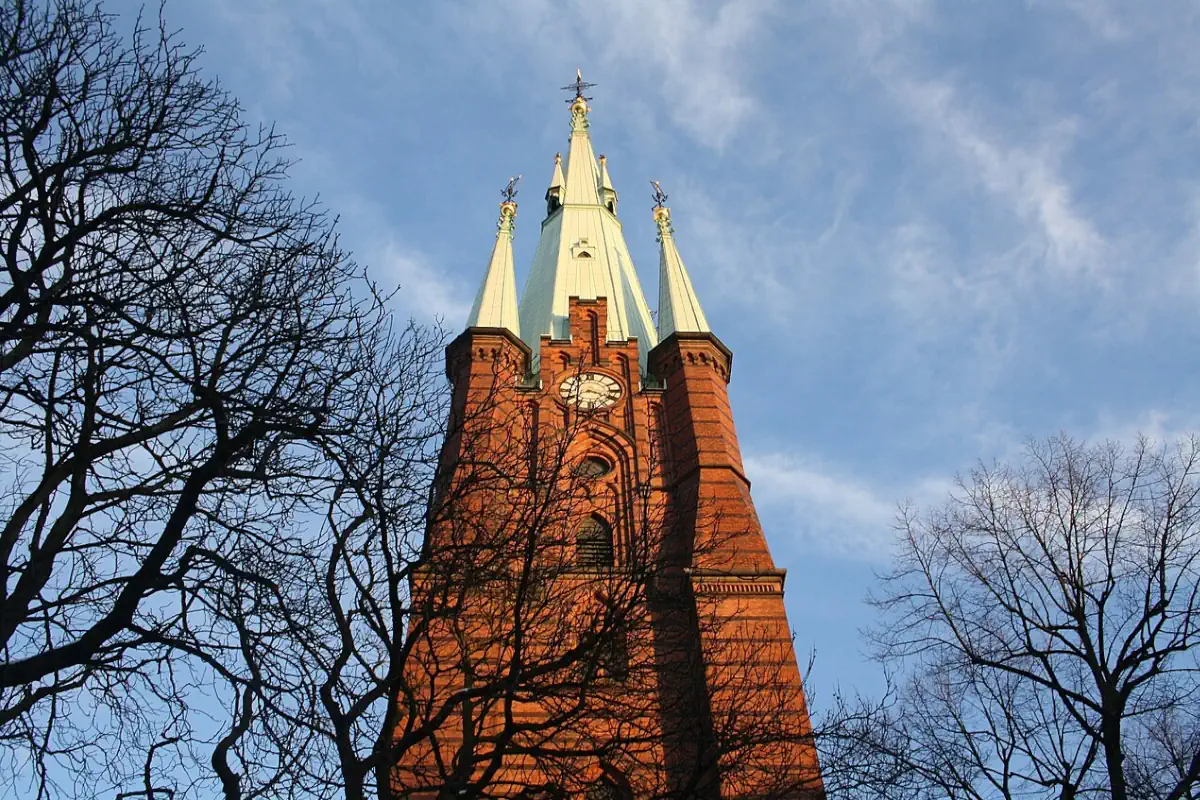
Klara Church (Klara kyrka) rises 116 meters above Norrmalm, making it the tallest church in central Stockholm and one of the city’s most enduring historic landmarks. Its slender Gothic Revival spire pierces the skyline beside Stockholm Central Station, creating a dramatic vertical contrast to the surrounding glass and steel of modern city life.
For many visitors arriving by train, Klara Church is the first historic silhouette they notice — a reminder that beneath the contemporary capital lies a medieval and early modern past that continues to shape Stockholm’s identity.
- Origins: 1280s convent of Saint Clare
- Rebuilt: Late 16th century (post-Reformation)
- Spire: 116 meters — one of Stockholm’s tallest
- Style: Gothic Revival (19th-century redesign)
- Setting: Norrmalm, beside Central Station
- Identity: Urban church and social outreach center
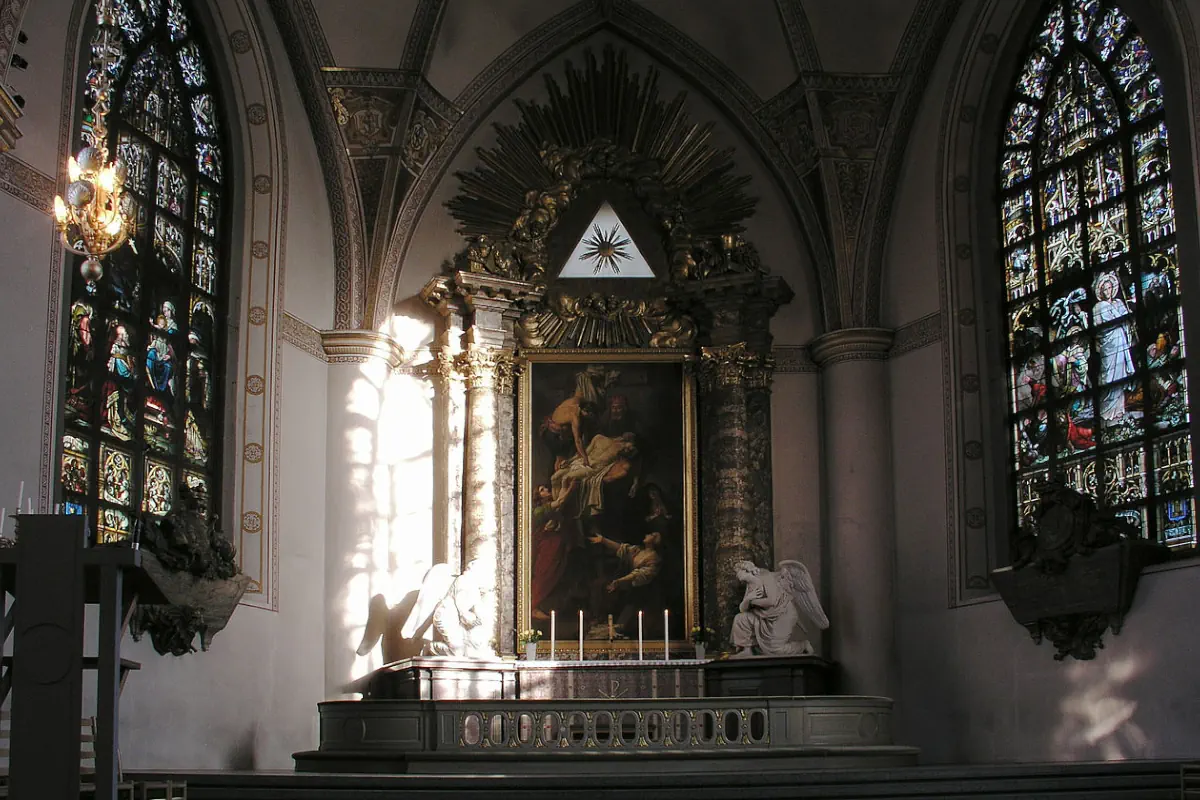
From Medieval Convent to Lutheran Landmark
The site originally housed the Saint Clare Convent, established in the 1280s by the Poor Clares. During the Reformation in 1527, King Gustav Vasa ordered the dissolution of monasteries across Sweden, and the convent at Klara was demolished. Only fragments survived, including two altarpiece doors that remain among the church’s oldest treasures.
Later in the 16th century, King John III commissioned the construction of a new church on the site. Built with Dutch craftsmen and royal architects, the structure reflected Renaissance influences while marking Sweden’s transition into a firmly Lutheran kingdom.
Architectural Grandeur and Gothic Revival Identity
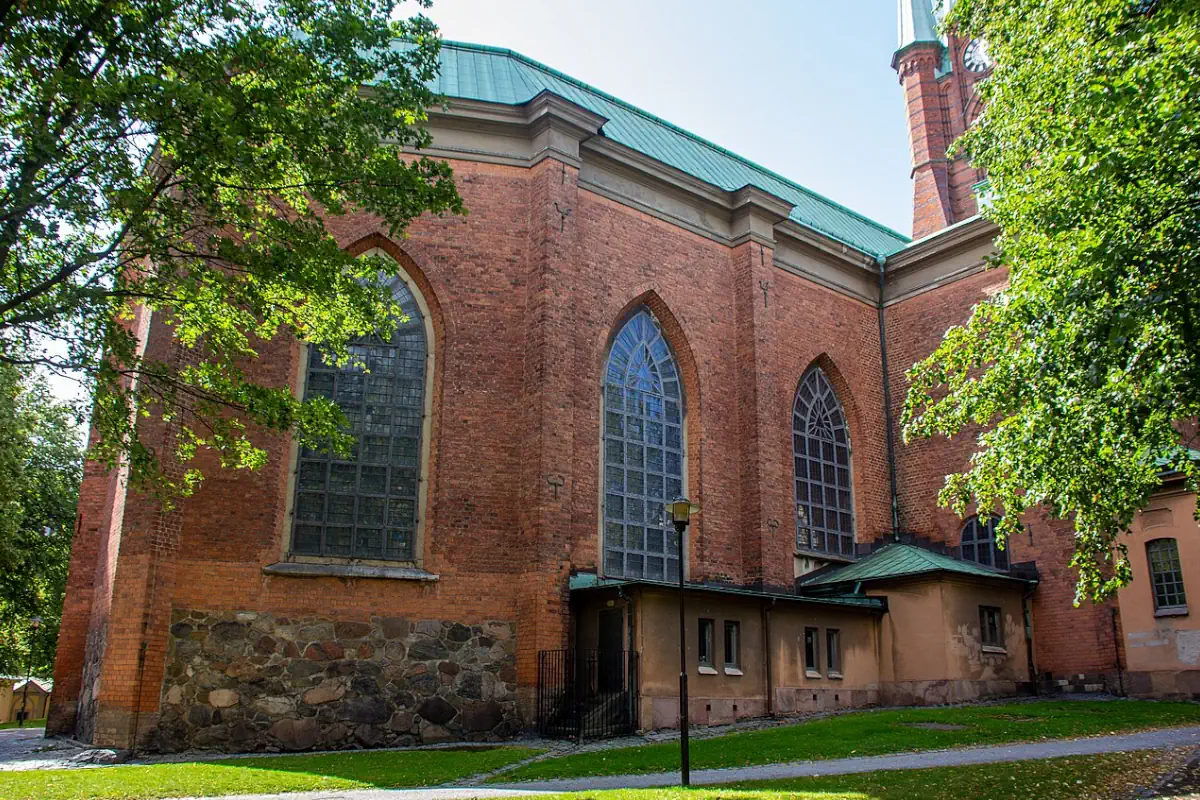
Although its foundations are Renaissance, much of Klara Church’s present appearance stems from 19th-century restoration led by architect Helgo Zettervall. A leading figure in Sweden’s Gothic Revival movement, Zettervall reshaped many historic churches according to his romanticized medieval vision.
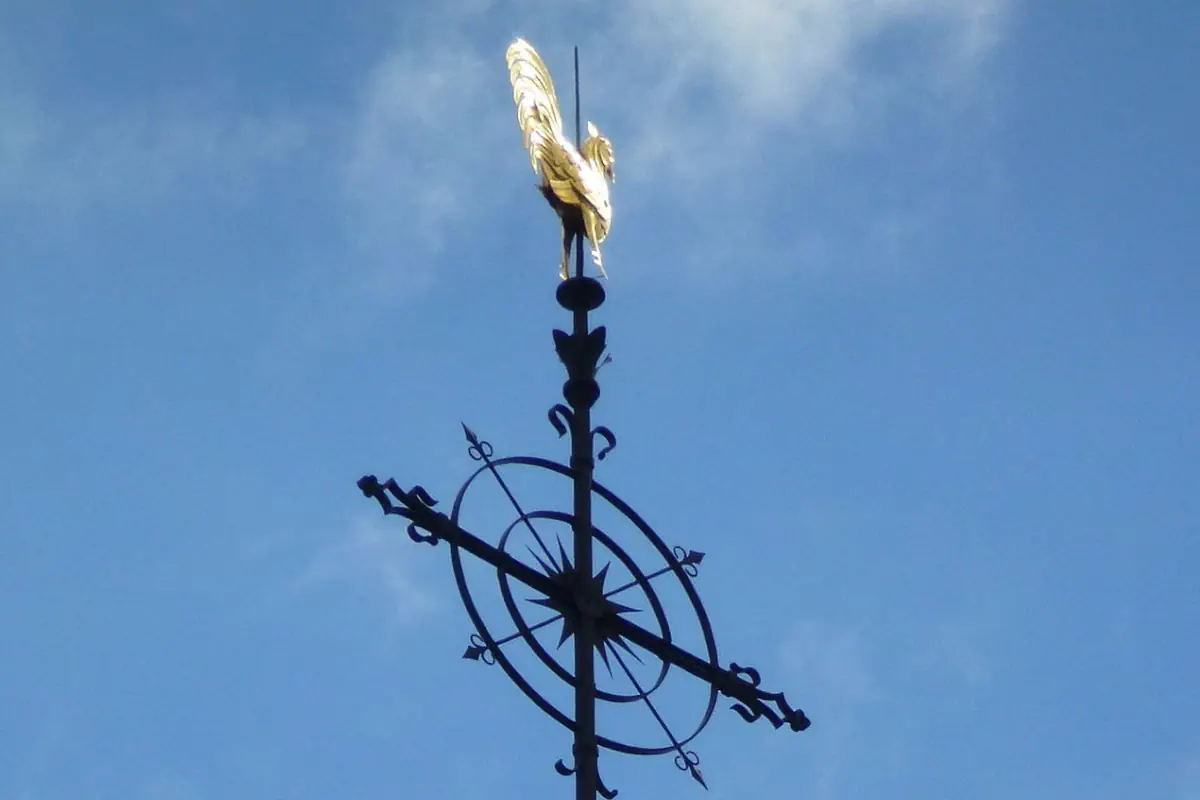
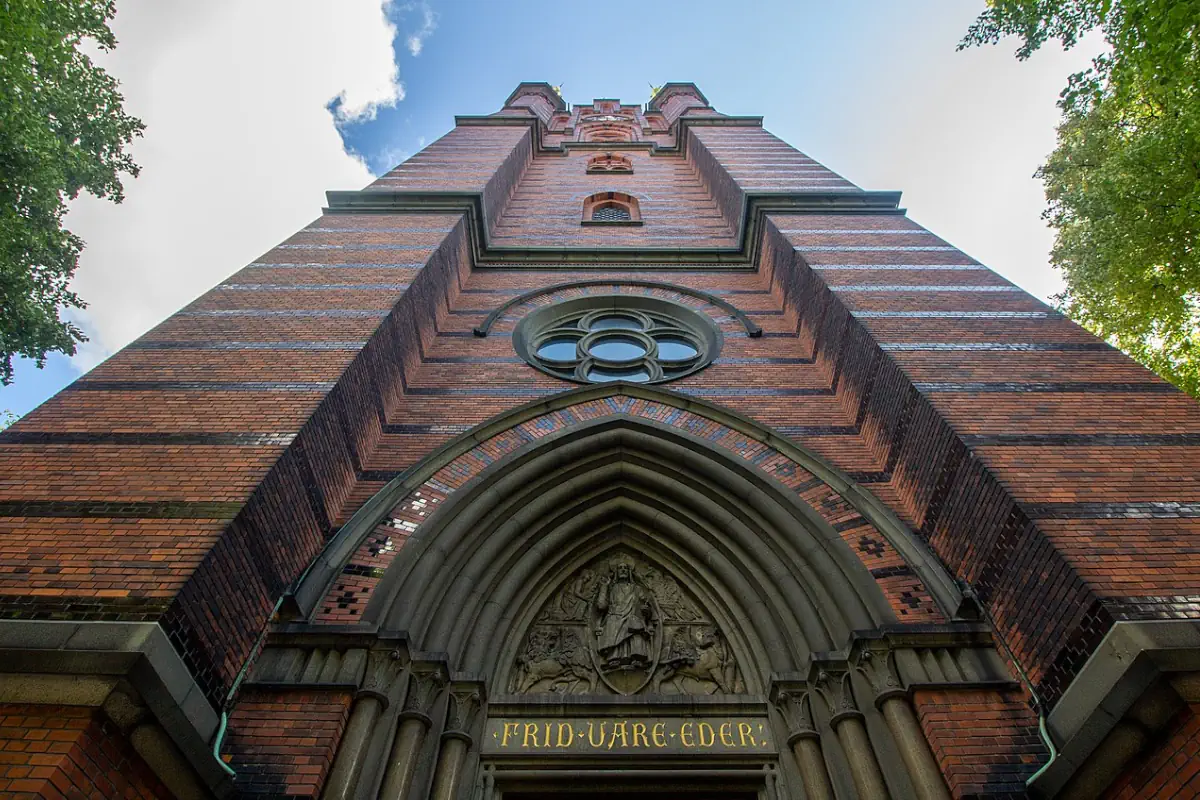
At Klara, he restored and extended the tower, dramatically elevating its spire to 116 meters — one of the tallest church towers in Sweden. The result is a striking vertical composition of red brick façades, pointed Gothic detailing, and a soaring spire that dominates the central skyline.
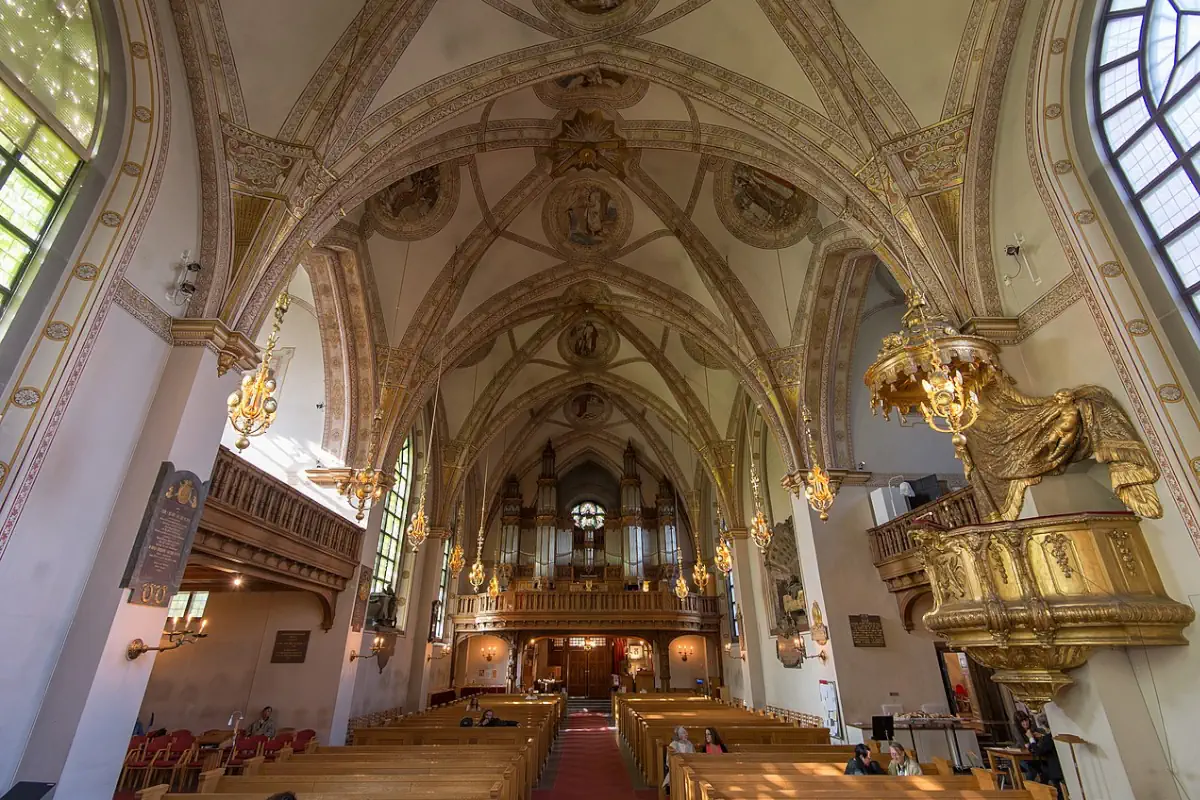
Inside, painted vaults by Olle Hjortzberg, stained glass windows, carved woodwork, and historic altarpiece elements create a luminous yet intimate sacred space. The high proportions provide excellent acoustics, and the church remains an active venue for music and concerts.
Klara Church and the Reinvention of Central Stockholm
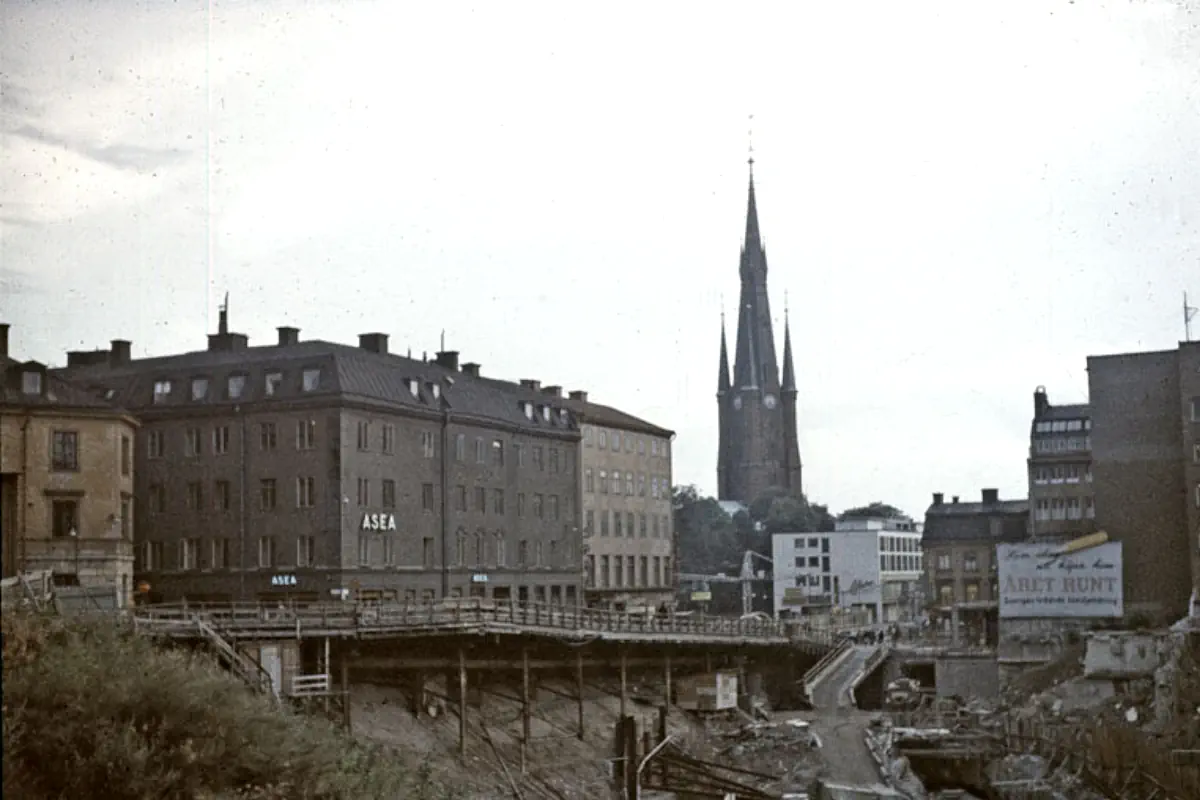
Few buildings illustrate Stockholm’s dramatic urban transformation as clearly as Klara Church. During the 1950s and 1960s, large parts of the historic Klarakvarteren district were demolished in one of Sweden’s most controversial redevelopment projects. Entire blocks of 19th-century housing, cafés, workshops, and cultural meeting places disappeared to make way for modern office complexes and infrastructure.
Amid this sweeping change, Klara Church remained — its 116-meter Gothic Revival spire rising above cranes, scaffolding, and newly constructed glass façades. The church became both a visual anchor and a symbolic survivor, linking contemporary Stockholm to its medieval foundations.
Architect Helgo Zettervall’s 19th-century restoration had already given Klara its dramatic vertical emphasis, but in the postwar era that height acquired new meaning. Surrounded by commercial redevelopment, the church’s soaring tower came to represent continuity in a rapidly modernizing capital.
Today, standing in the churchyard beneath the spire, visitors can observe the layered narrative of Stockholm itself: medieval convent origins, Reformation upheaval, Renaissance rebuilding, Gothic Revival reinterpretation, modernist urban planning, and contemporary social outreach. Klara Church is not merely a historic monument — it is a living witness to the reinvention of central Stockholm across seven centuries.
In this sense, Klara functions as both skyline landmark and historical compass, orienting visitors within the evolving story of the Swedish capital.
A Central Stockholm Church Network
Klara Church forms part of a remarkable cluster of historic churches in central Stockholm. A short walk east stands St. Jacob’s Church, known for its red-brick Renaissance architecture near Kungsträdgården. To the north rises Johannes Church, dramatically positioned on Brunkebergsåsen with its Neo-Gothic tower commanding sweeping city views.
Further south in Gamla Stan lies the German Church (Tyska kyrkan), reflecting Stockholm’s medieval Hanseatic heritage. Together, these churches illustrate the city’s architectural evolution — from medieval mercantile spirituality to Renaissance brick tradition and Gothic Revival urban monumentality.
The Miracle at Klara: Social Revival and Urban Mission
In the late 1980s, Klara Church faced closure, with only a handful of elderly parishioners remaining. Under the leadership of priest Carl-Eric Sahlberg, the church began outreach efforts at nearby Sergels torg, offering coffee, conversation, and spiritual care to people struggling with homelessness, addiction, and isolation.
Today, Klara Church continues its outreach programs while hosting concerts, services, and cultural events. It remains both a parish church and a symbol of resilience in the heart of the capital.
Visiting Klara Church
Klara Church is located in Norrmalm, just steps from Stockholm Central Station and Sergels torg. Entry is generally free, though donations are appreciated to support its ongoing social mission.
Its central location makes it easy to combine with nearby landmarks such as Sergels torg, Drottninggatan, Stockholm Concert Hall, and Kungsträdgården. Despite its busy surroundings, the enclosed churchyard offers a peaceful pause amid the city’s movement.
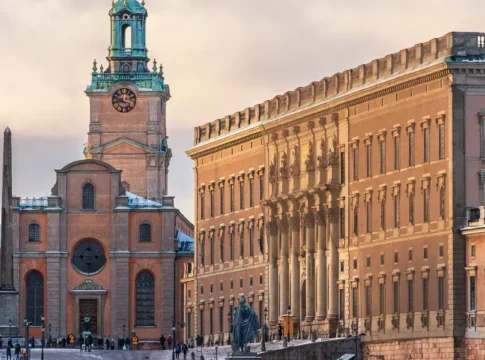
Explore more about Stockholm’s medieval heritage at Storkyrkan, the grand cathedral that stood beside the medieval fortress of Tre Kronor, symbolizing sacred power and political authority.
medieval and early modern past that continues to shape Stockholm’s identity.
Why Klara Church Matters
Klara Church represents more than one architectural style or historical era. It is a medieval foundation reshaped by the Reformation, a Renaissance church transformed by Gothic Revival idealism, a skyline landmark that survived large-scale urban demolition, and a living institution defined by social renewal.
Standing beneath its soaring spire, visitors experience not only vertical grandeur but the layered resilience of Stockholm itself.