Stockholm’s architectural landmarks trace the city’s evolution from medieval Gamla Stan to modern Scandinavian design. Discover royal palaces, civic monuments, public squares, and iconic buildings across Sweden’s capital.
Stockholm’s cityscape reflects more than seven centuries of architectural development. Medieval trading squares, royal palaces, civic institutions, and modern urban spaces together form a city where each district tells a different chapter of Sweden’s architectural history.
The architecture of Stockholm reflects the city’s transformation from a medieval Baltic trading port into the modern capital of Sweden. Across the islands of the city center, visitors can see buildings from different periods including medieval churches, seventeenth-century royal palaces, nineteenth-century civic institutions, and modern Scandinavian architecture shaped by urban planning in the twentieth century.
From the narrow streets of Gamla Stan to the modern plazas of Norrmalm, Stockholm’s landmarks reveal how the Swedish capital evolved from a medieval port into a modern Scandinavian metropolis.
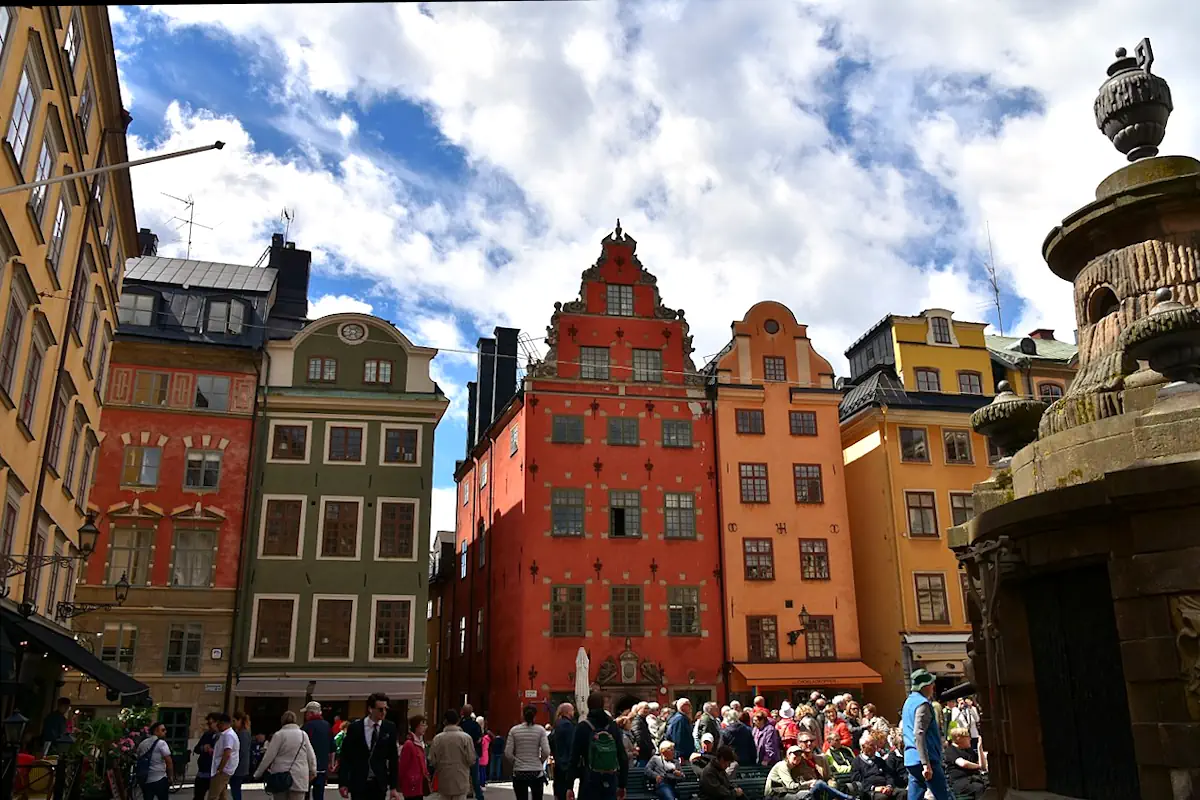
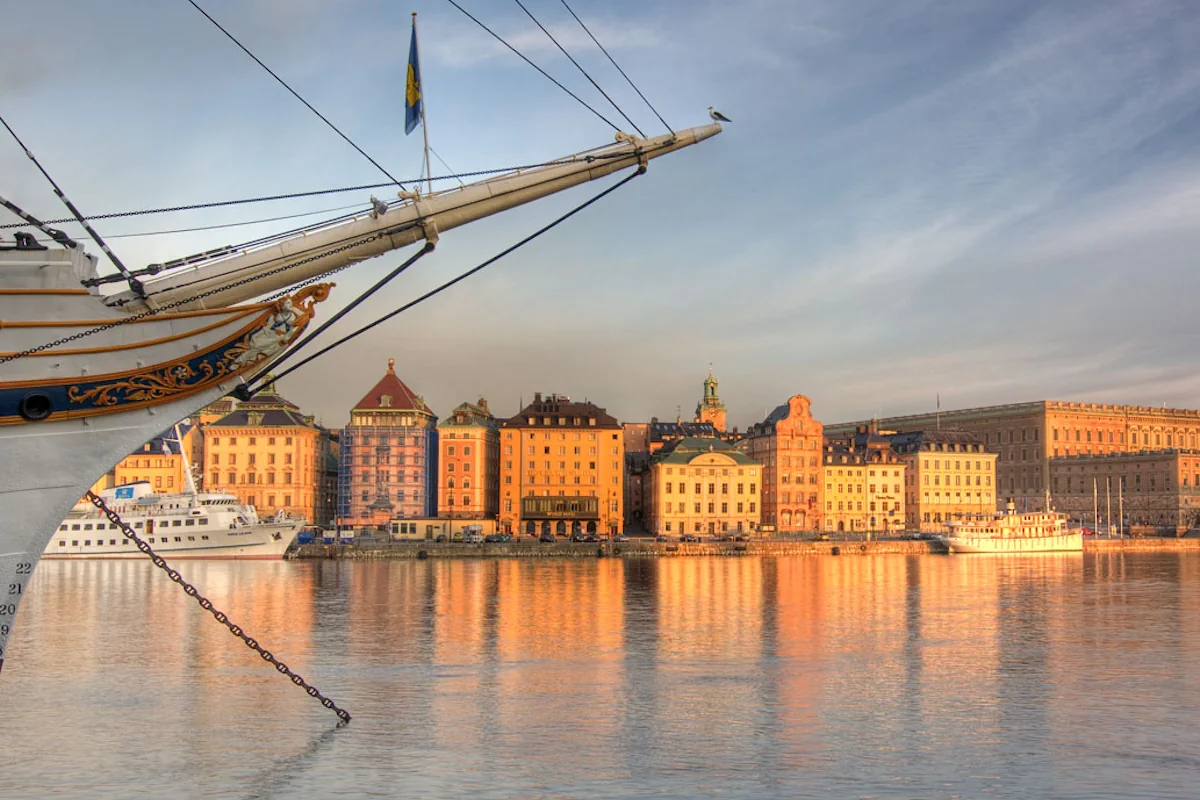
The historic core of Stockholm lies in Stortorget, the oldest square in the city. Surrounded by colorful merchant houses and medieval streets, the square has been the political and commercial center of Stockholm since the Middle Ages.
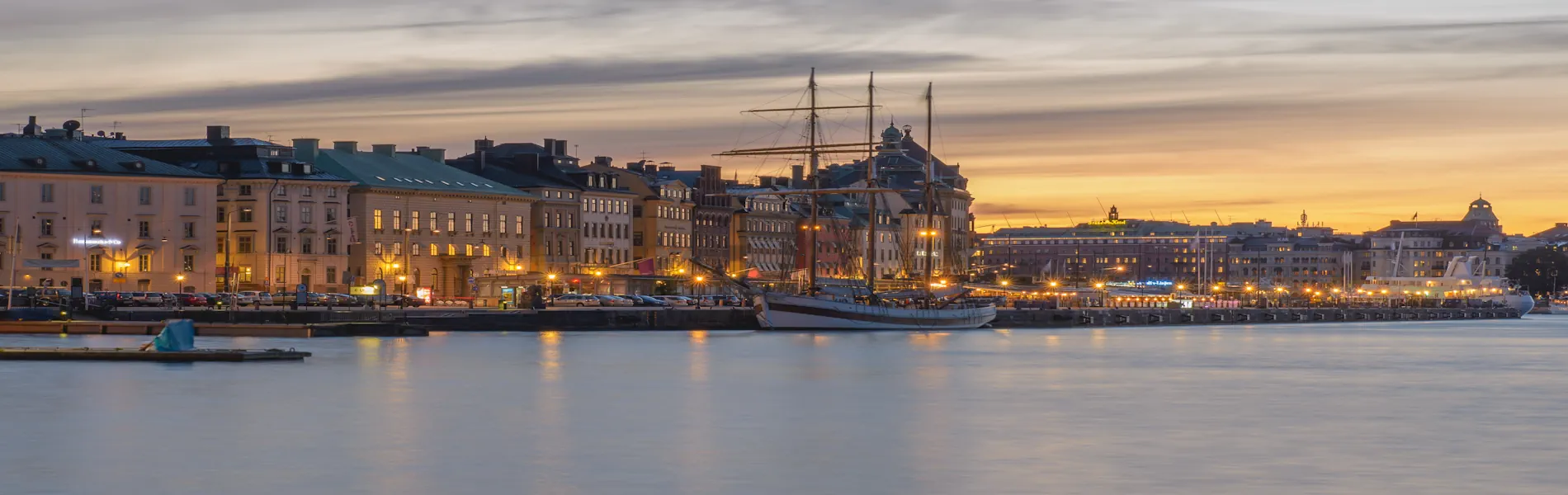
Along the nearby waterfront runs Skeppsbron, a historic quay where merchant ships once arrived from across the Baltic. Today the promenade provides views of the city’s harbor and the royal architecture of the old town.
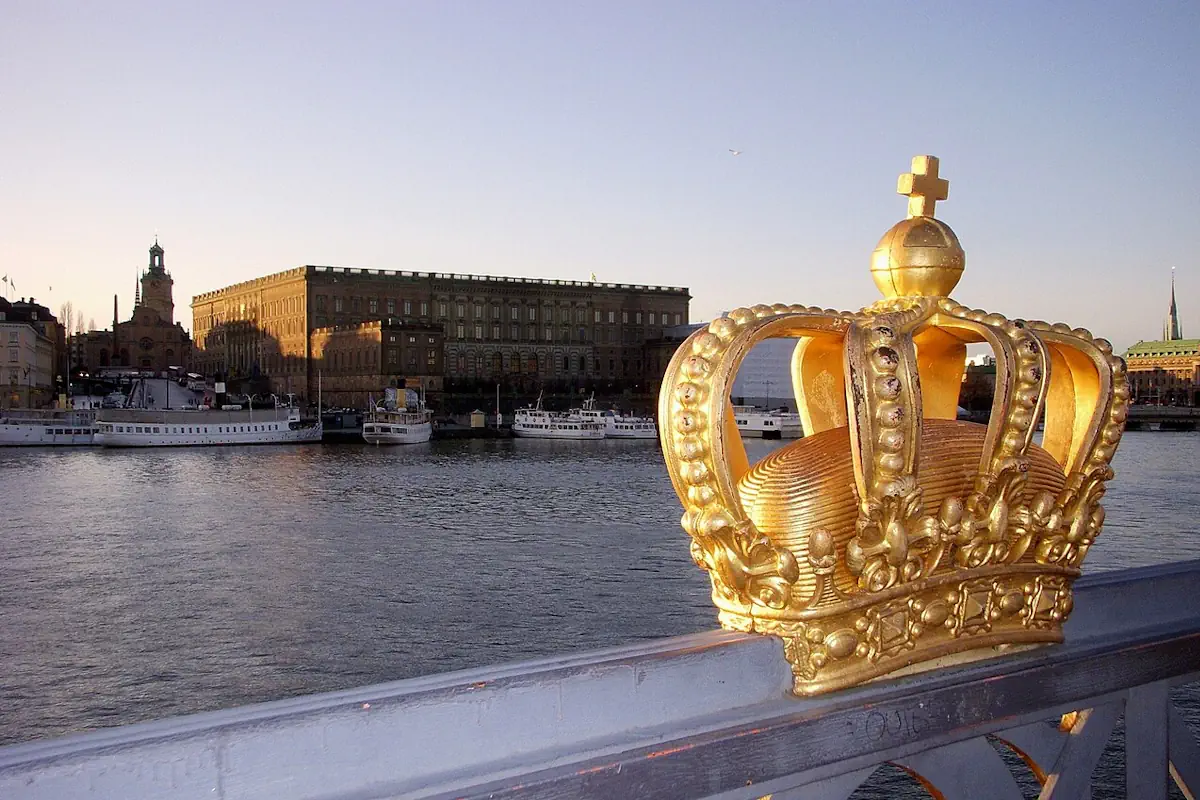
Dominating the skyline nearby is the Stockholm Royal Palace, one of Europe’s largest royal residences and the official home of the Swedish monarchy.
Across the water on Riddarholmen stands Riddarholmen Church, a medieval church that serves as the burial site of many Swedish monarchs and an important monument of Stockholm’s royal history.

As Stockholm expanded during the nineteenth and early twentieth centuries, a series of monumental public buildings reshaped the city.
The most famous of these is Stockholm City Hall, an iconic example of Swedish National Romantic architecture overlooking Lake Mälaren. Completed in 1923, the building is known worldwide as the venue for the annual Nobel Prize banquet.
Nearby cultural institutions include the elegant Stockholm Concert Hall, home of the Royal Stockholm Philharmonic Orchestra and the location where the Nobel Prize ceremonies take place.
Another architectural landmark of the period is the circular Stockholm Public Library, designed by architect Gunnar Asplund. Its distinctive rotunda became one of the most influential examples of Scandinavian modern architecture.
Transportation also shaped the city’s development. Stockholm Central Station has served as Sweden’s primary railway hub since the nineteenth century and remains one of the country’s busiest transport centers.
Architecture and urban design are also explored at ArkDes, Sweden’s national museum dedicated to architecture and design.


During the twentieth century, Stockholm underwent major urban redevelopment that reshaped its central districts.
One of the most recognizable results of this transformation is Sergels Torg, a large modernist plaza in the heart of the city. Its geometric design and sunken pedestrian space became a defining feature of post-war Stockholm.
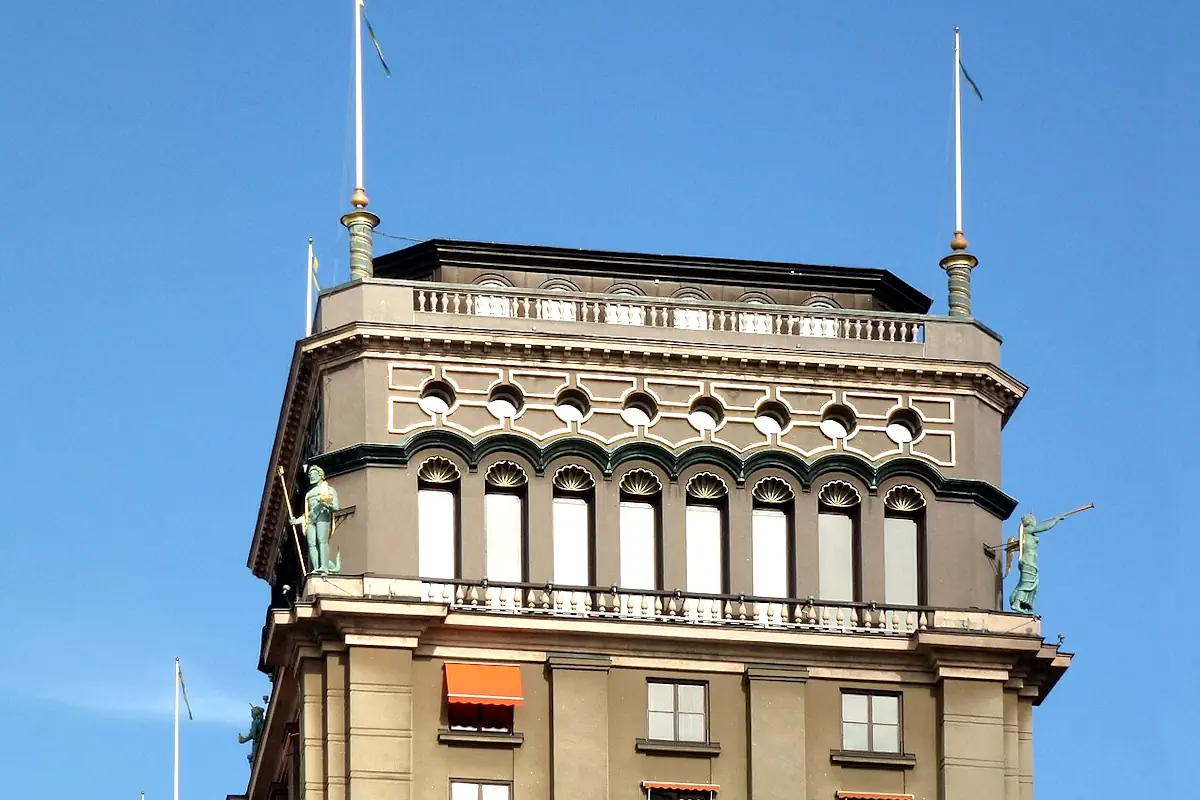
Nearby rise the twin skyscrapers known as Kungstornen. Completed in the 1920s, these towers were among the first skyscrapers built in Europe and symbolized Stockholm’s early embrace of modern urban architecture.
The surrounding district of Hötorget also reflects the city’s modern commercial life. The nearby square and market area are explored in the article on Hötorget and Haymarket, where historic market traditions meet modern retail and hotel architecture such as Haymarket by Scandic.

Stockholm’s architectural story continues with modern public venues and sports arenas.
The spherical Avicii Arena, formerly known as the Ericsson Globe, is one of the world’s largest spherical buildings and a distinctive landmark in southern Stockholm.
Another historic sporting landmark is Stockholm Olympic Stadium, built for the 1912 Summer Olympics and still used for sporting events and concerts today.
Not all of Stockholm’s architectural stories are visible above ground. Beneath the city lies a network of metro stations, some of which have become part of local legend.
One of the most mysterious is Kymlinge Ghost Station, an unfinished metro station that has never opened to passengers and is often described as Stockholm’s most haunted underground location.
Several architectural styles can be seen throughout Stockholm’s cityscape. Medieval brick churches and narrow streets dominate Gamla Stan, while the seventeenth and eighteenth centuries introduced grand royal architecture such as the Royal Palace. During the early twentieth century, Swedish National Romantic architecture produced landmarks like Stockholm City Hall, followed by Scandinavian modernism represented by buildings such as the Stockholm Public Library and the urban redevelopment of Norrmalm.
Many of these architectural traditions are explored further in Stockholm’s museums, including the collections at Stockholm art museums.
Stockholm’s landmarks illustrate the city’s continuous transformation over centuries. Medieval squares, royal palaces, civic monuments, and modern urban spaces coexist within a compact city built across islands and waterways.
Together these buildings create one of Northern Europe’s most distinctive architectural landscapes.
Visitors interested in art and design can also explore our guide to Stockholm art museums, which highlights the city’s major cultural institutions and artistic heritage.