 Photo: Leonhard Lenz (CC0)
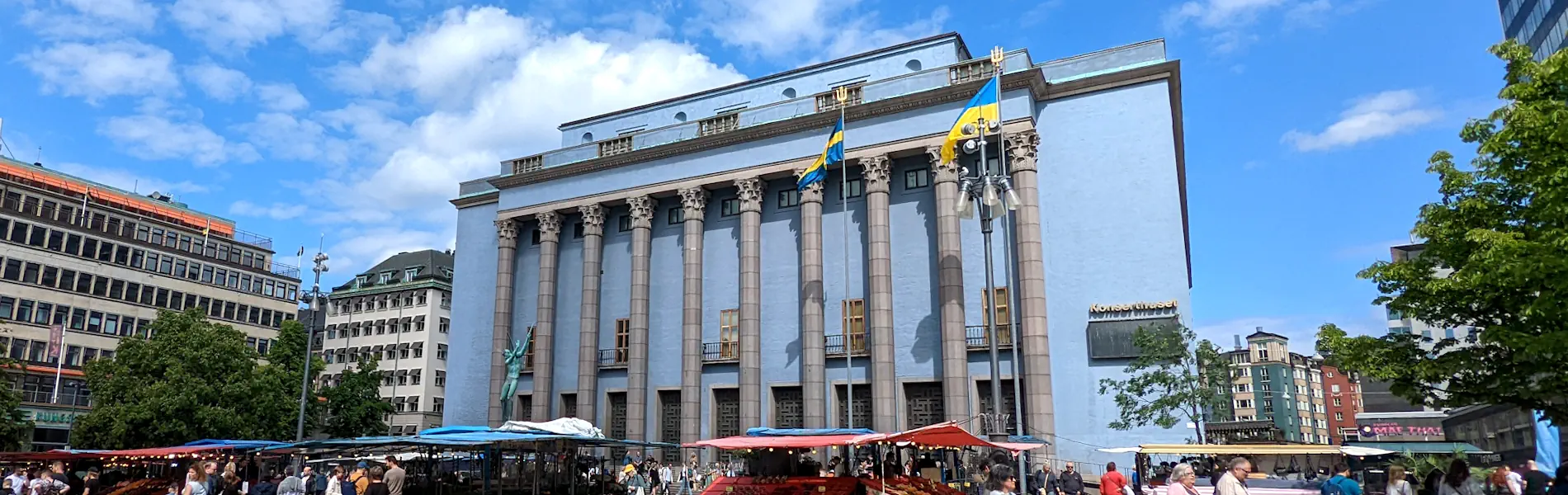
Stockholm Concert Hall, located at Hötorget and designed by Ivar Tengbom, is a key venue for music and cultural events. It is best known as the site of the Nobel Prize ceremony and as the home of the Royal Stockholm Philharmonic Orchestra.
Rising above Hötorget square with its distinctive blue façade and towering columns, the Stockholm Concert Hall (Stockholms konserthus) is one of the city’s most beloved landmarks. Designed by architect Ivar Tengbom and opened in 1926, it has since become a symbol of both Sweden’s cultural life and architectural elegance.
On Nobel Prize Day each December, the Concert Hall transforms into a global stage. Laureates walk across its blue-lit interior, receiving their awards beneath the gaze of royalty, scholars, and international guests. The moment blends music, ceremony, and architecture into one of Sweden’s most iconic cultural rituals.

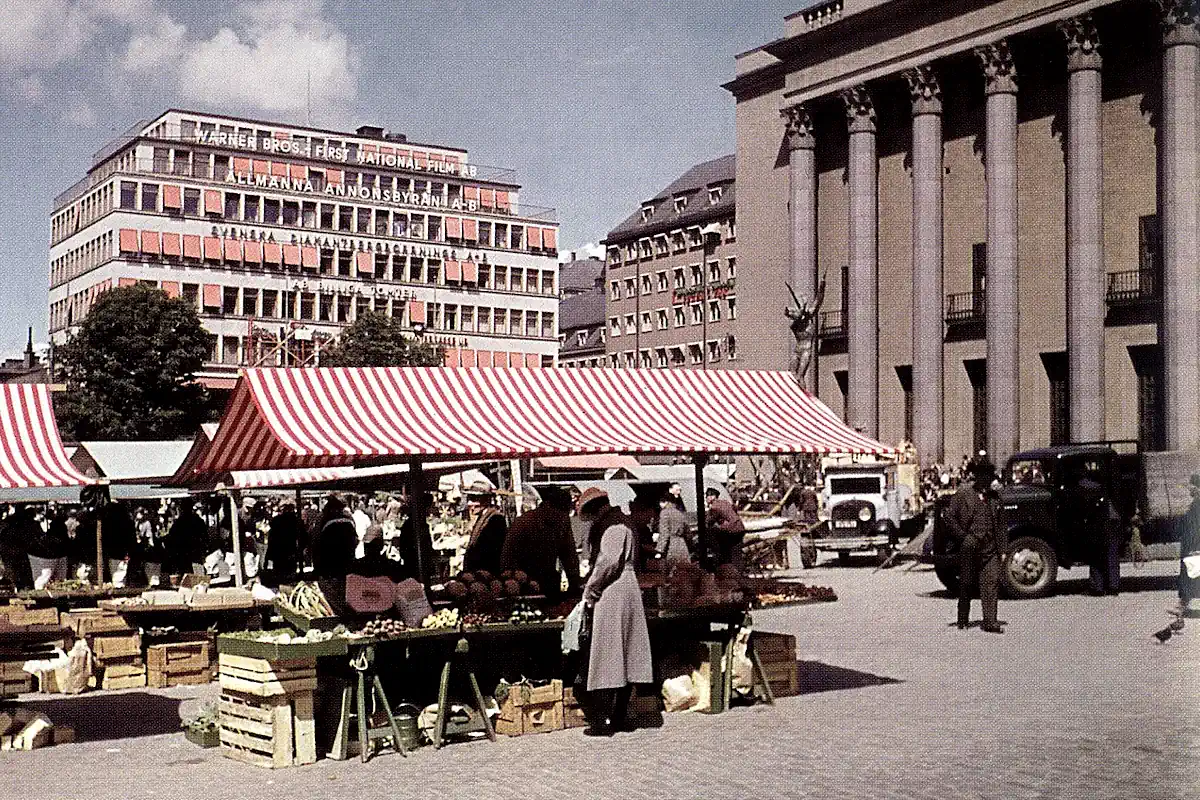
The Concert Hall is one of the clearest expressions of Nordic Classicism—often called Swedish Grace—a style that balanced classical symmetry with modern restraint. In Stockholm, this movement marked a transition from the heavier National Romantic architecture seen in landmarks like Stockholm City Hall toward a lighter, more refined civic aesthetic.
Its striking light-blue walls and ten tall Corinthian columns create a monumental presence, while clean lines and symmetry give it a timeless, dignified quality.
Together with Stockholm Public Library, Stockholm City Hall, and landmarks such as Stockholms Stadion and Högalidskyrkan, the Concert Hall forms part of Stockholm’s early 20th-century architectural transformation. While the Concert Hall refined Nordic Classicism, nearby Stockholm City Hall embodies the earlier National Romantic movement that shaped Stockholm’s civic identity. Within Stockholm’s architectural timeline, the Concert Hall represents the shift from National Romanticism to Nordic Classicism—a lighter, more refined civic expression that defined the 1920s.
Few venues in Sweden carry as much cultural weight as the Stockholm Concert Hall. It is:
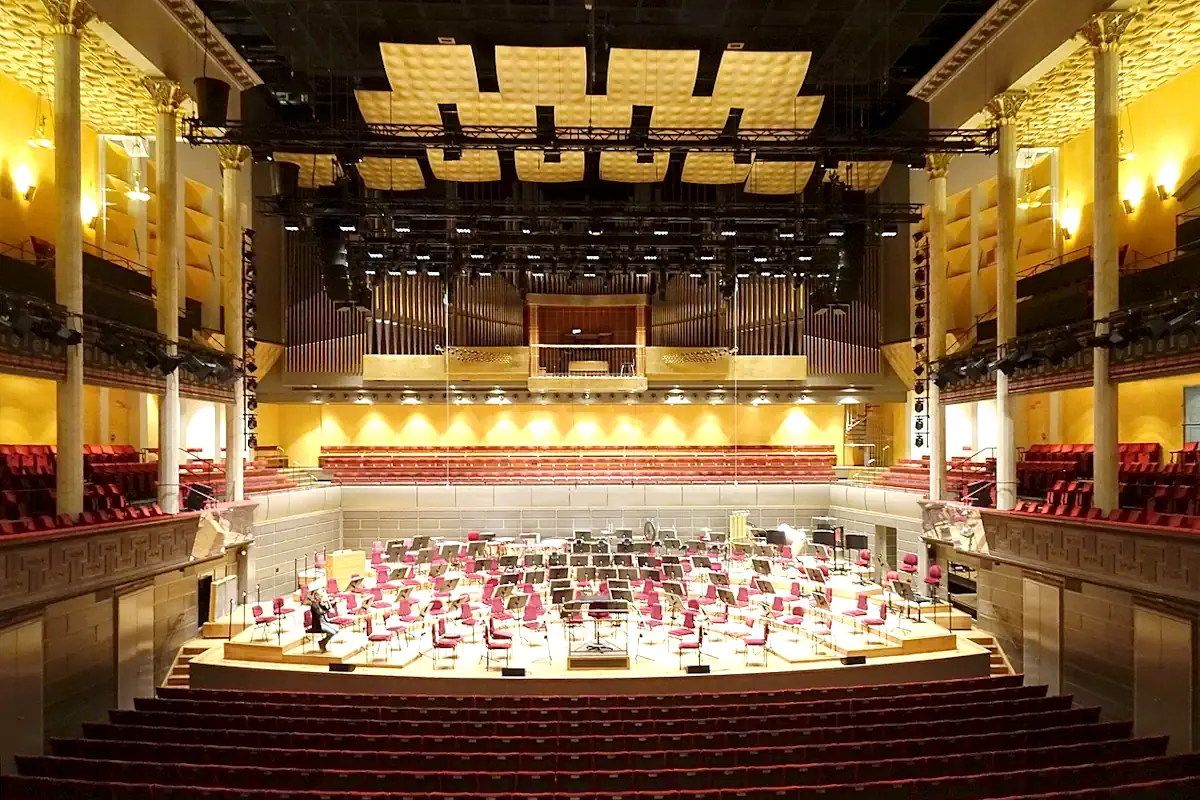

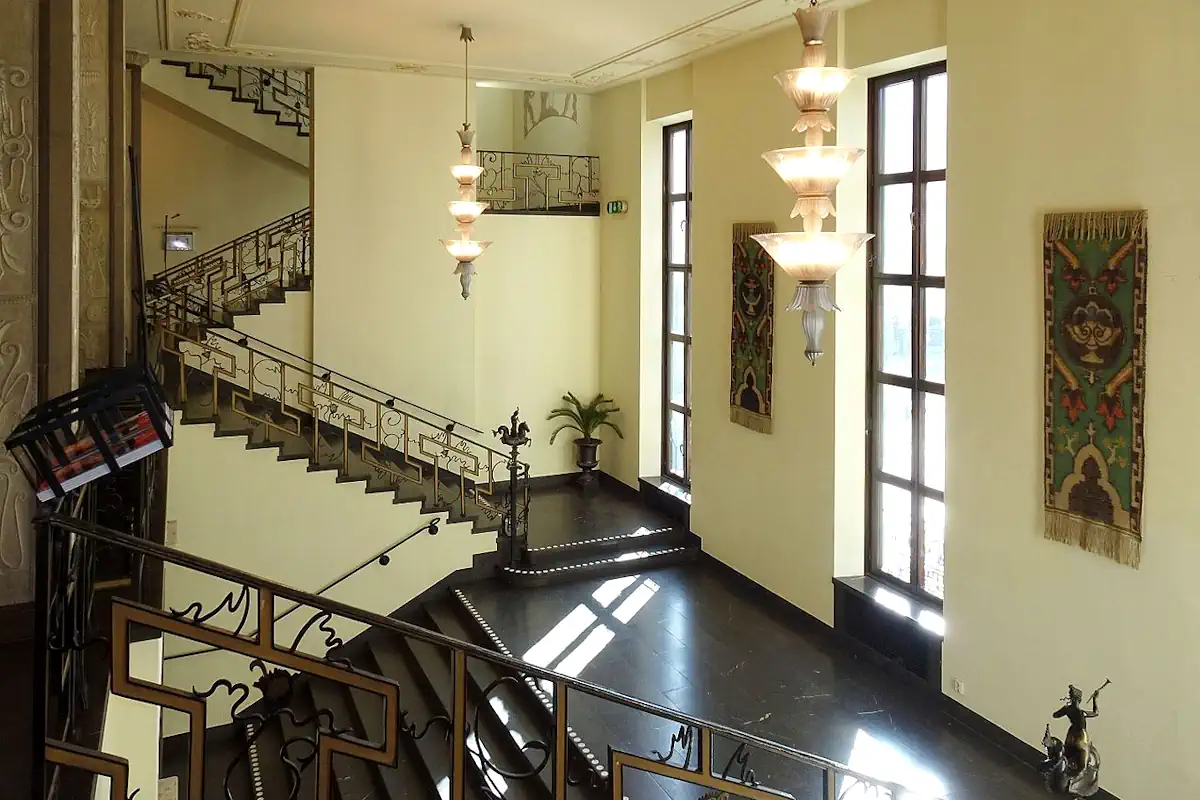
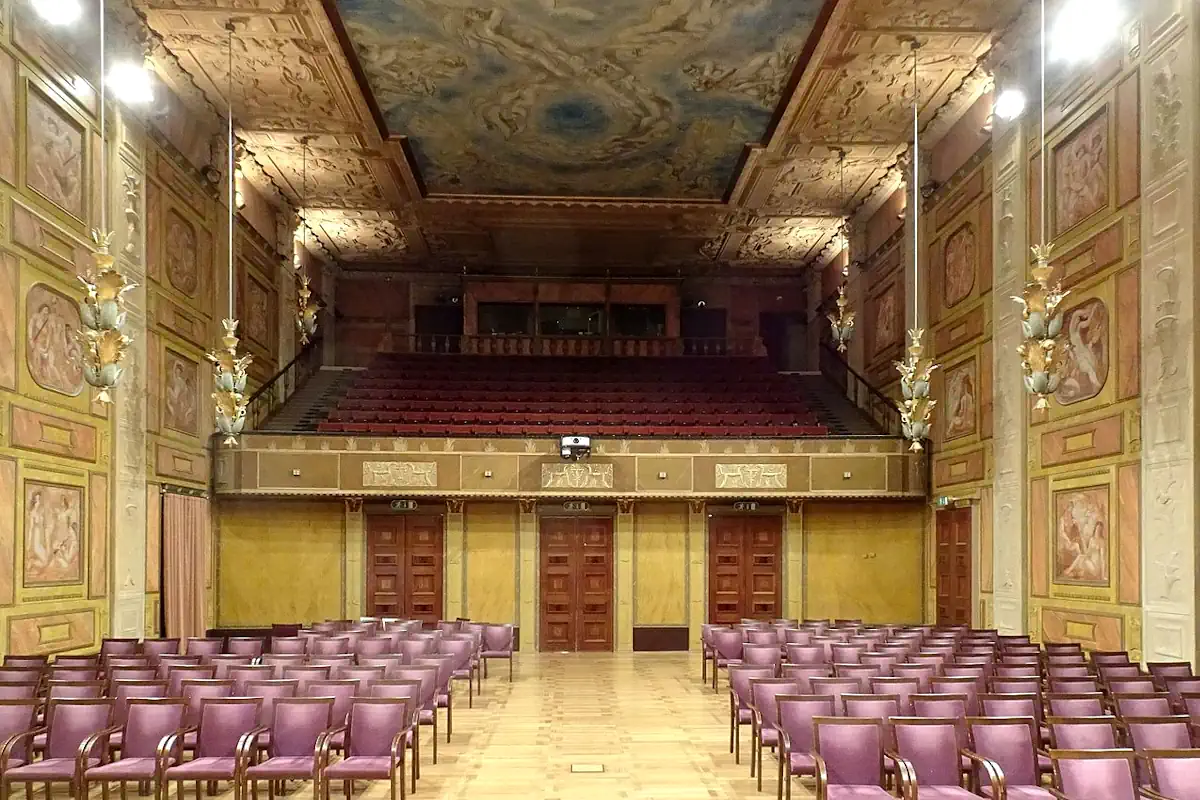
The Concert Hall offers three major performance spaces:
Ivar Tengbom (1878–1968) was one of Sweden’s leading architects of the early 20th century. His design for the Concert Hall stands as the pinnacle of the Swedish Grace movement, combining classical forms with modern restraint. Tengbom’s legacy also includes the Stockholm School of Economics and the Swedish Institute in Rome, further cementing his influence on Scandinavian architecture.
A visit to the Concert Hall places you in the lively Hötorget district, surrounded by cultural and culinary gems:
With its luminous blue façade and civic geometry, the Concert Hall belongs to our Architectural Landmarks collection — a defining example of 1920s Nordic Classicism in the heart of the capital. To explore how Swedish architecture evolved from these movements into contemporary design, the Swedish Museum of Architecture offers exhibitions examining the ideas behind the built environment.
Standing on Hötorget, the Concert Hall’s blue façade becomes even more striking at sunset, when the columns catch the fading light and the square fills with movement from markets, cafés, and evening performances.
Stockholm Concert Hall
Stockholms konserthus