



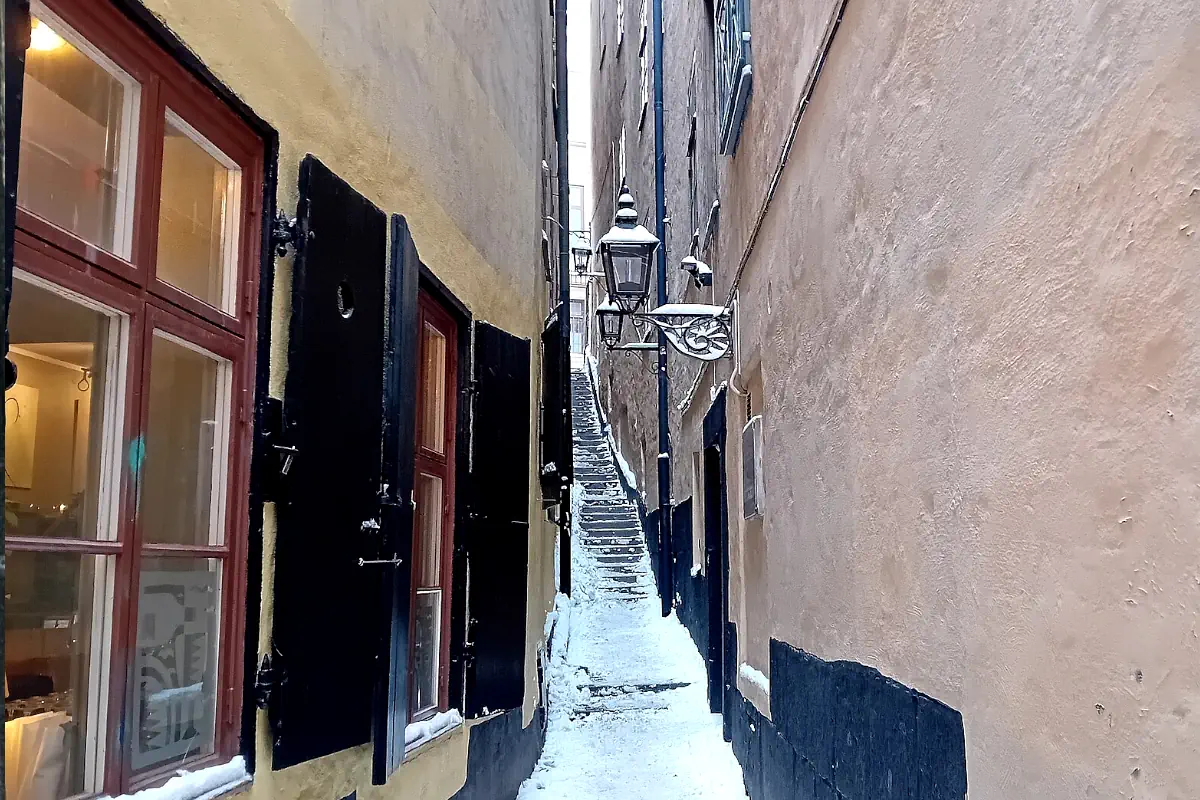
Mårten Trotzigs Gränd is the narrowest street in Stockholm, located in Gamla Stan. Dating from the medieval period, it reflects the dense urban fabric of the historic city, with a width of less than one meter at its narrowest point.
Tucked between the tall medieval buildings of Gamla Stan, Mårten Trotzigs Gränd is officially the narrowest street in Stockholm. At its tightest point, the alley measures just 90 centimeters wide — so narrow that two people can barely pass each other.
With its 36 worn stone steps polished smooth by centuries of footsteps, steep incline, and towering facades, the alley feels like a preserved fragment of medieval Stockholm — intimate, vertical, and unexpectedly dramatic.
Few places capture the density and mystery of medieval Stockholm quite like this narrow passage.

Located only a short walk from Stortorget in Gamla Stan, the alley lies within the dense medieval street network of Stockholm’s Old Town. Mårten Trotzigs Gränd is often included in short walking routes through Gamla Stan, linking major landmarks within just a few minutes.
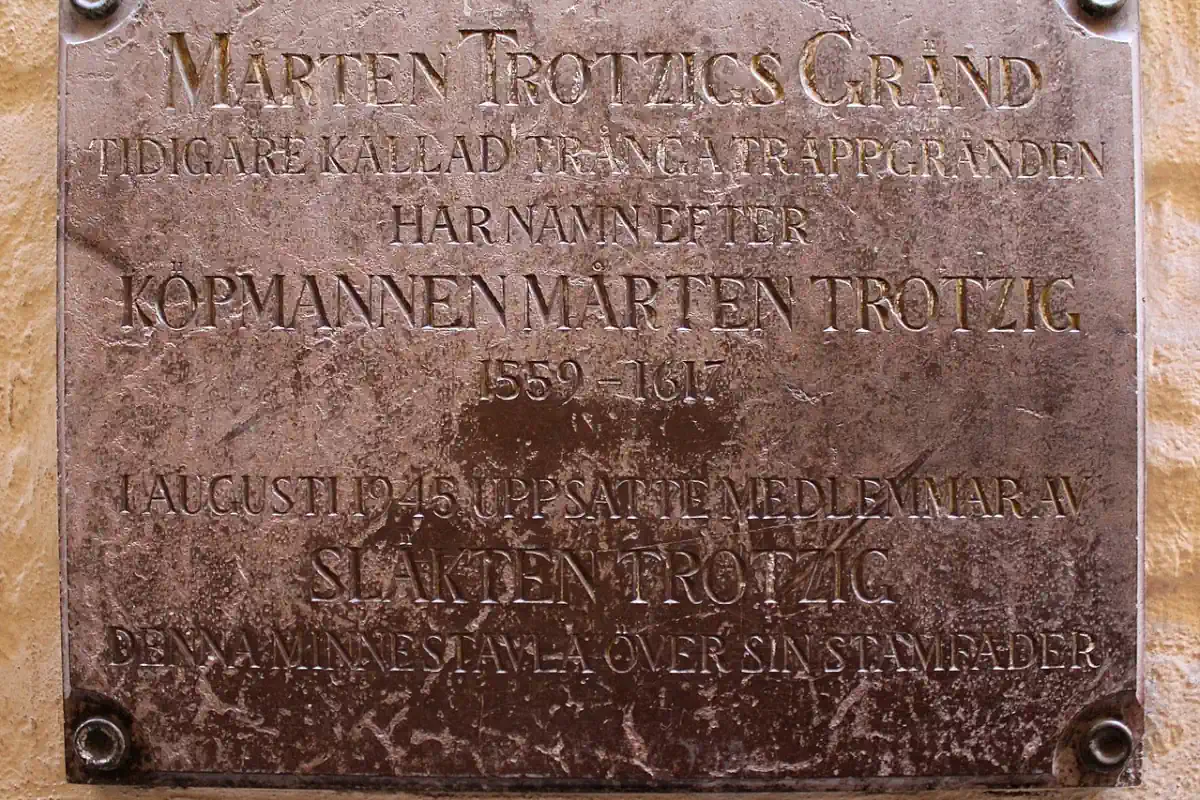
The alley is named after Mårten Trotzig, a German-born merchant who became one of Stockholm’s wealthiest traders in the late 1500s. He owned property in the area and conducted trade in iron and copper — two of Sweden’s most important exports at the time.
Although the passage existed earlier, it was officially named in the 1940s after centuries of informal use. The alley reflects how densely medieval Stockholm was built — narrow passages maximized space inside the city walls.
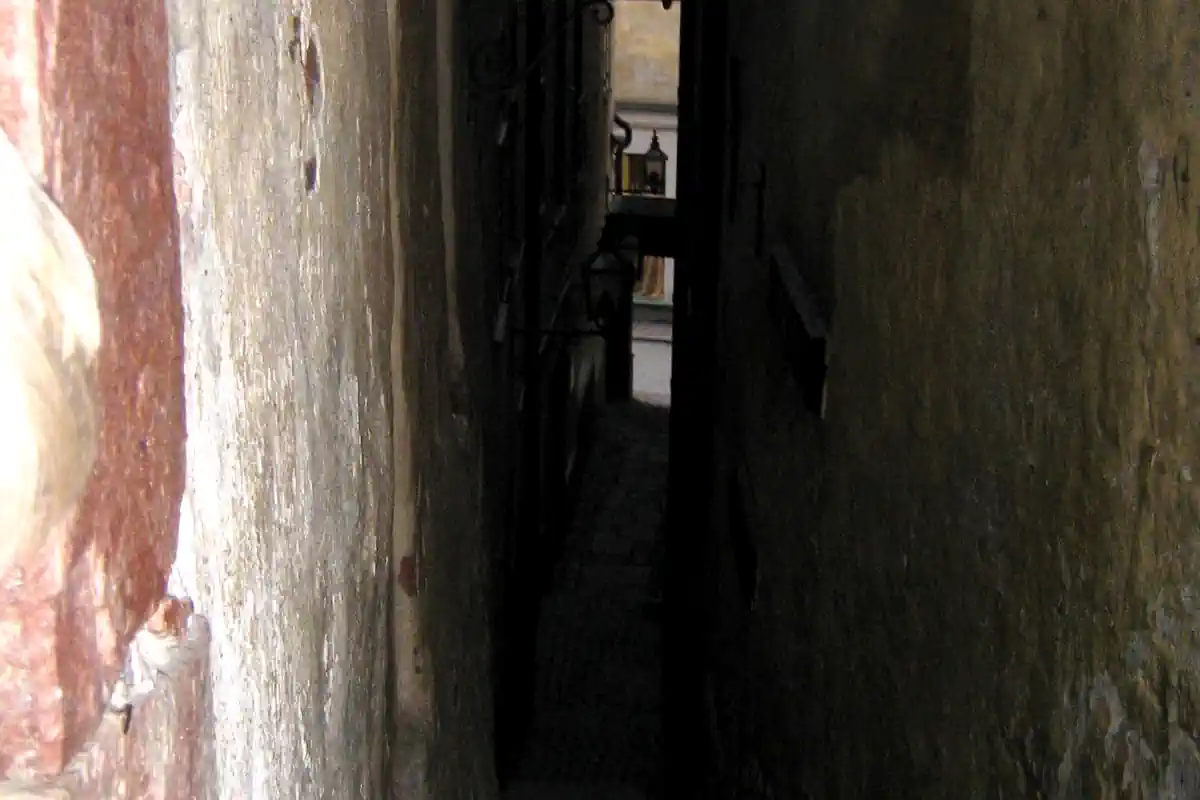
Walking through Mårten Trotzigs Gränd feels like stepping into a vertical corridor of history. The tall, closely pressed buildings block much of the daylight, creating a cool, shadowed atmosphere even in summer.
At the top of the stairs, you emerge into brighter streets — a striking contrast that makes the alley feel almost theatrical. It’s this dramatic compression and release of space that makes it one of the most photographed spots in Gamla Stan.
During the late medieval period, the narrow streets of Gamla Stan formed the backdrop to dramatic events such as the Stockholm Bloodbath of 1520.
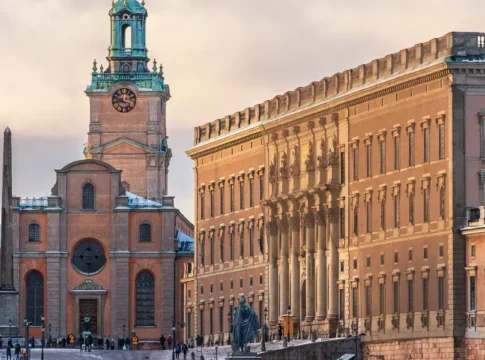
Nearby, you can continue toward Skeppsbron’s scenic waterfront or explore the historic square of Stortorget. In fact, within a 5-minute walk, you can reach Stortorget, Storkyrkan, and the Stockholm Royal Palace.
Mårten Trotzigs Gränd may be small in size, but it offers one of Gamla Stan’s most memorable moments. In just a few steps, you pass through centuries of Stockholm’s urban history — compressed into 90 centimeters of medieval atmosphere. A brief detour, yet a lasting impression.
Mårten Trotzigs Gränd
Mårten Trotzigs Gränd