The Royal Palace of Stockholm: Seat of Swedish Royal Authority
Rising above the northern edge of Gamla Stan, the Royal Palace of Stockholm (Kungliga Slottet) stands as the formal seat of Swedish royal authority. Monumental in scale and Baroque in expression, it remains both a working institution and one of Europe’s largest active royal residences.
Built upon the remains of the medieval Tre Kronor Castle, the palace embodies the transformation of Sweden from a fortified medieval kingdom into a centralized early modern state. From this site, monarchs have governed, received foreign envoys, and shaped the evolution of Sweden from medieval kingdom to modern constitutional monarchy.
With more than 600 rooms across eleven floors, the palace serves as the ceremonial heart of the Swedish monarchy — a place where state, tradition, and history converge within Stockholm’s historic core.


- Built: 1697–1754 (after the Tre Kronor fire)
- Architect: Nicodemus Tessin the Younger
- Rooms: Over 600
- Style: Baroque
- Function: Official residence of the Swedish monarch
- Location: Gamla Stan, beside Storkyrkan
From Tre Kronor to Baroque Monument
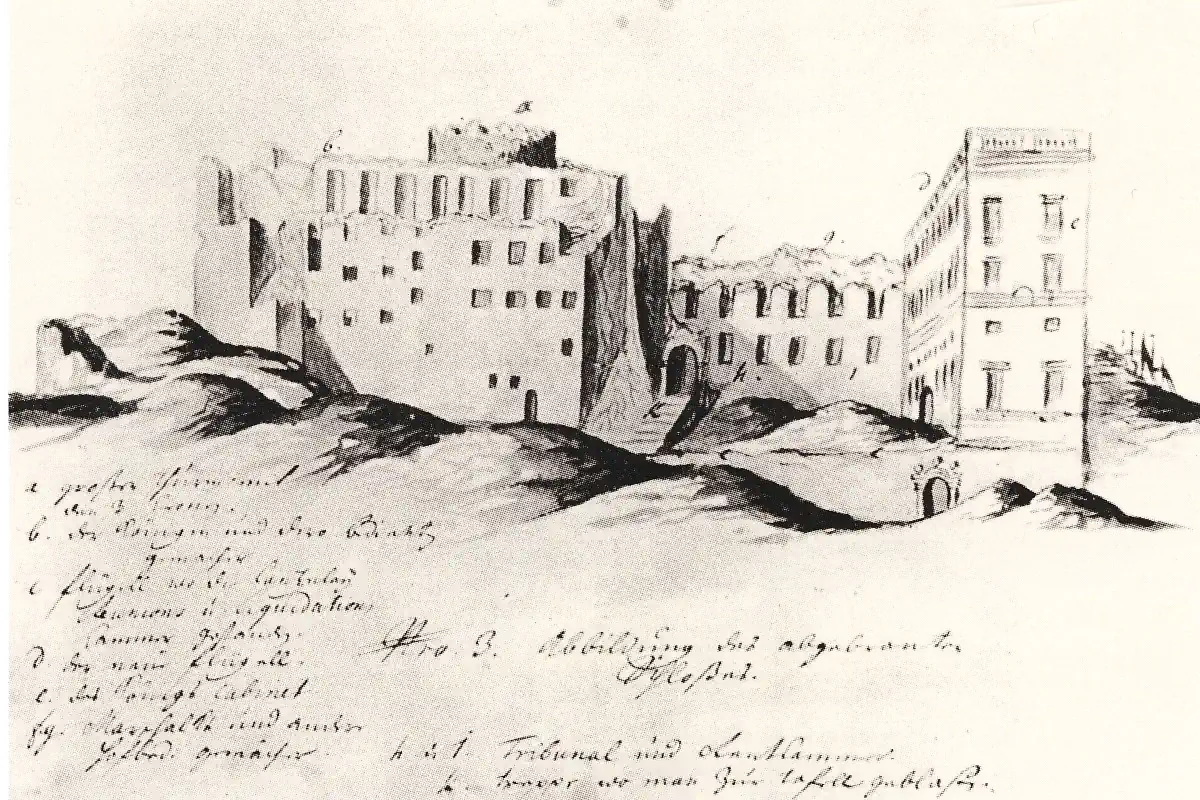
Long before the present palace rose in Baroque grandeur, the site was occupied by the fortress known as Tre Kronor. Associated with Stockholm’s early consolidation under Birger Jarl in the 13th century, the original stronghold guarded the narrow passage between Lake Mälaren and the Baltic Sea — the strategic gateway upon which Sweden’s capital was founded.
For centuries, Tre Kronor symbolized medieval royal authority. It was here that monarchs ruled during the turbulent late Middle Ages, and from these walls the kingdom evolved into a centralized state.
When the castle was destroyed by fire in 1697, the reconstruction that followed marked not merely architectural renewal but political transformation. Under architect Nicodemus Tessin the Younger, the medieval fortress was reimagined as a grand Baroque palace inspired by Roman classicism and European absolutist courts. The new structure projected permanence, order, and sovereign authority.
The palace was formally inaugurated in 1754 under King Adolf Fredrik and Queen Louisa Ulrika, establishing it as the principal seat of Swedish royal power.
Architecture of Authority
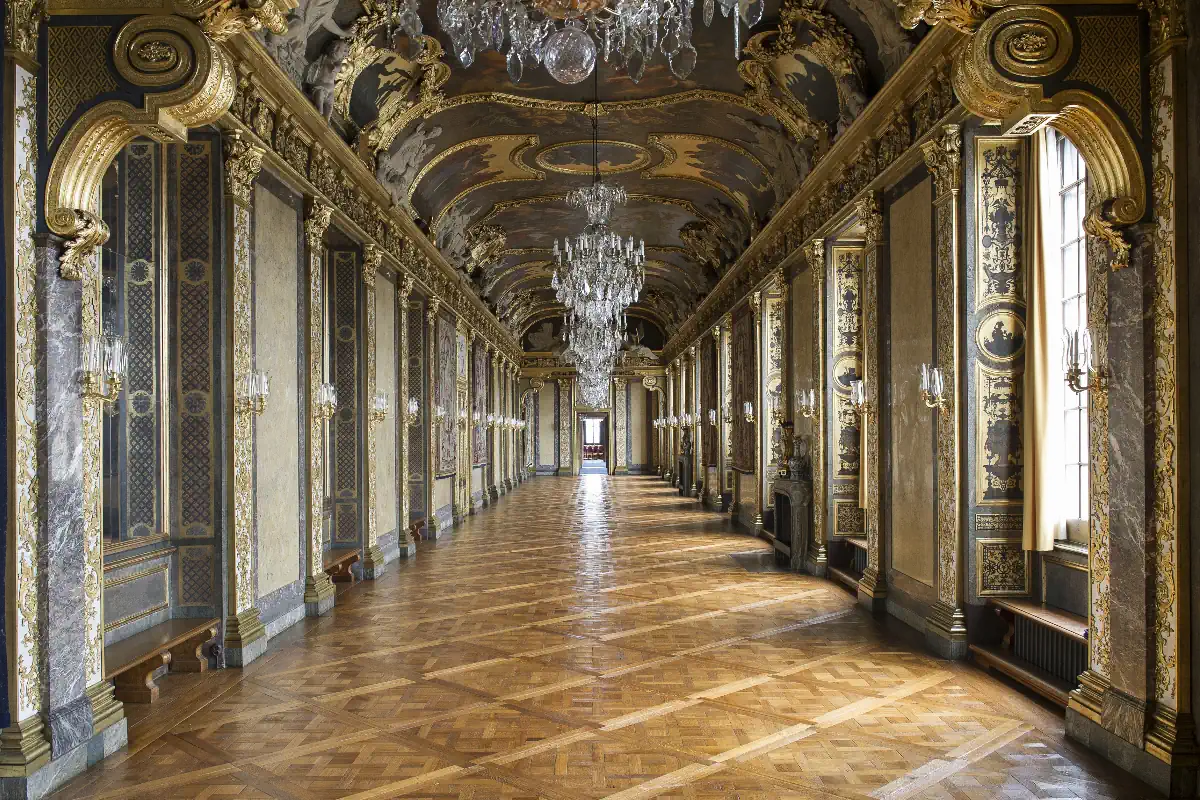
Architecturally, the Royal Palace in Stockholm is one of Northern Europe’s most significant Baroque monuments. Its symmetrical façades, monumental staircases, and richly ornamented interiors reflect 18th-century ideals of power and order.
Visitors pass through grand courtyards, marble halls, and state chambers where ambassadors are still received and official ceremonies conducted. The palace is not a preserved relic; it remains an active instrument of statecraft within a modern constitutional monarchy.


Royal Apartments, Treasury and Armoury
The palace complex includes four major institutions, each illuminating a different dimension of Sweden’s royal heritage:
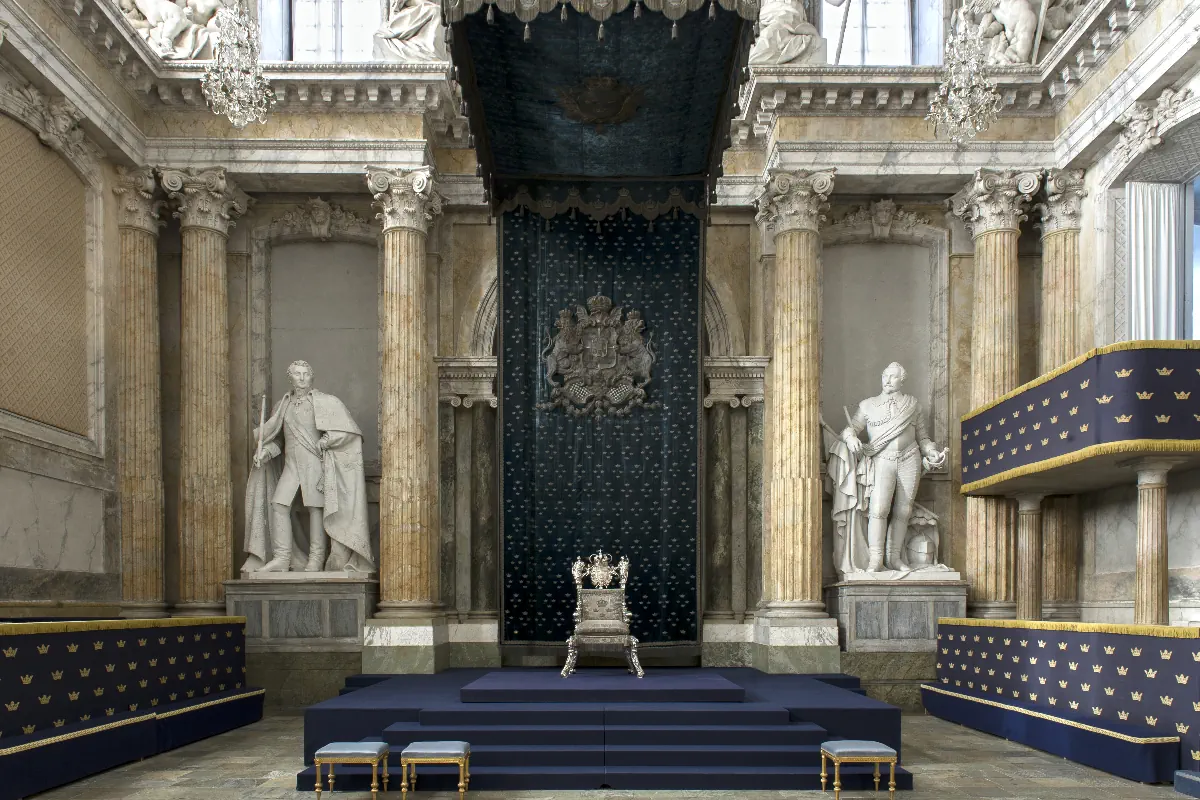
- The Royal Apartments – State rooms used for official audiences, banquets, and ceremonies.
- The Treasury – Home to Sweden’s Crown Jewels and regalia, symbols of coronation and sovereign authority.
- The Royal Armoury – One of Sweden’s oldest museums, preserving royal costumes, ceremonial armour, and historic carriages.
- Tre Kronor Museum – Exhibiting archaeological remains of the medieval fortress beneath the present palace.
The Palace Within the Royal Landscape
The Royal Palace forms part of a broader ceremonial and dynastic axis within central Stockholm. Just across Riddarfjärden stands Riddarholmen Church, the burial site of Sweden’s monarchs — where generations of rulers rest in continuity with the authority exercised at the palace.
Beyond the city center lies Drottningholm Palace, the private residence of the royal family. Together, these sites define Royal Stockholm — a historic axis of authority, ceremony, and dynastic memory.
Alongside the Royal Palace, landmarks such as Stockholm City Hall and the Vasa Museum reflect the architectural and political evolution of Sweden’s capital.
The Palace Today: A Living Institution
Unlike many European palaces that function solely as museums, the Royal Palace remains actively used for state ceremonies, diplomatic receptions, and official audiences. While the royal family primarily resides at Drottningholm, the palace continues to serve as the constitutional and ceremonial heart of Sweden’s monarchy.
Plan Your Visit
- Opening Hours: Summer daily (10:00–17:00); Winter Tuesday–Sunday (10:00–16:00).
- Time Needed: Allow 2–3 hours to explore the Royal Apartments, Treasury, Armoury, and Tre Kronor Museum.
- Photography: Permitted in most areas (no flash).
- Address: Slottsbacken 1, 111 30 Stockholm.
- Changing of the Guard: Daily during summer; selected days in winter.
- Does the royal family live here? The palace is the official residence of the monarch, though the family primarily resides at Drottningholm Palace.
- How large is the palace? It contains over 600 rooms across eleven floors.
- Can visitors enter the palace? Yes. The Royal Apartments, Treasury, Armoury, and Tre Kronor Museum are open to the public.