Sweden’s Oldest Museum: Royal Armor, Robes, and Regalia
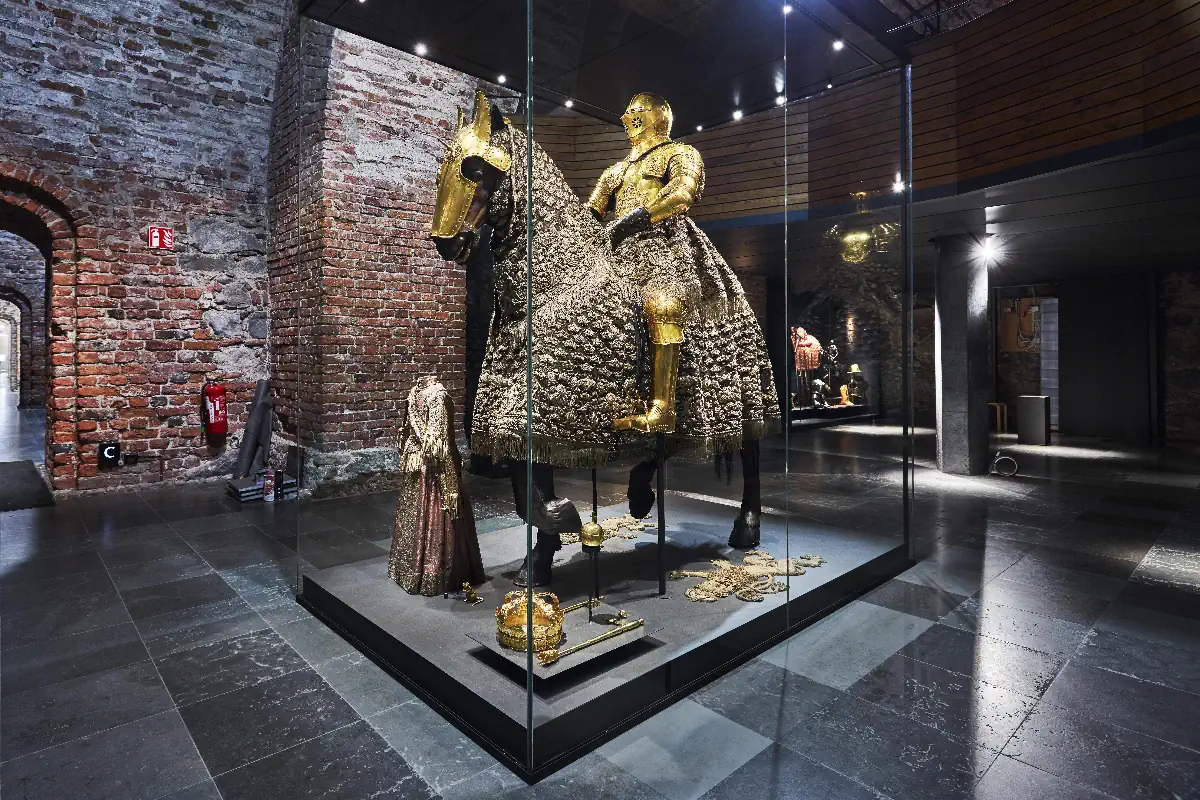
Step into the vaulted stone cellars beneath the Royal Palace and discover the Swedish Royal Armoury (Livrustkammaren) — Sweden’s oldest museum and one of Europe’s most atmospheric royal collections. Here, armor dented in battle, bloodstained garments, coronation robes, and gilded carriages tell the story of Sweden’s monarchy through triumph, tragedy, and ceremony.
The museum’s location beneath the palace adds to its atmosphere — low stone vaults and dim lighting create a dramatic setting that feels fitting for relics of kings and battles.
- Founded: 1628 by King Gustav II Adolph
- Location: Cellar vaults of the Royal Palace, Gamla Stan
- Type: Sweden’s oldest museum
- Highlights: Royal armor, coronation robes, assassination costumes, ceremonial carriages
- Admission: Free entry
Preserving Centuries of Regal Heritage
Founded in the 17th century, the Royal Armoury traces its origins back to 1628, when King Gustav II Adolph ordered that his battle-worn clothing be kept for posterity following his campaign in Poland. He declared it should remain “uthi Rust-Cammaren till en evig åminnelse” — “in the Armoury for everlasting remembrance.” This moment gave birth to a collection that has become one of Europe’s most remarkable royal legacies.


Royal Memories, Blood, and Battles
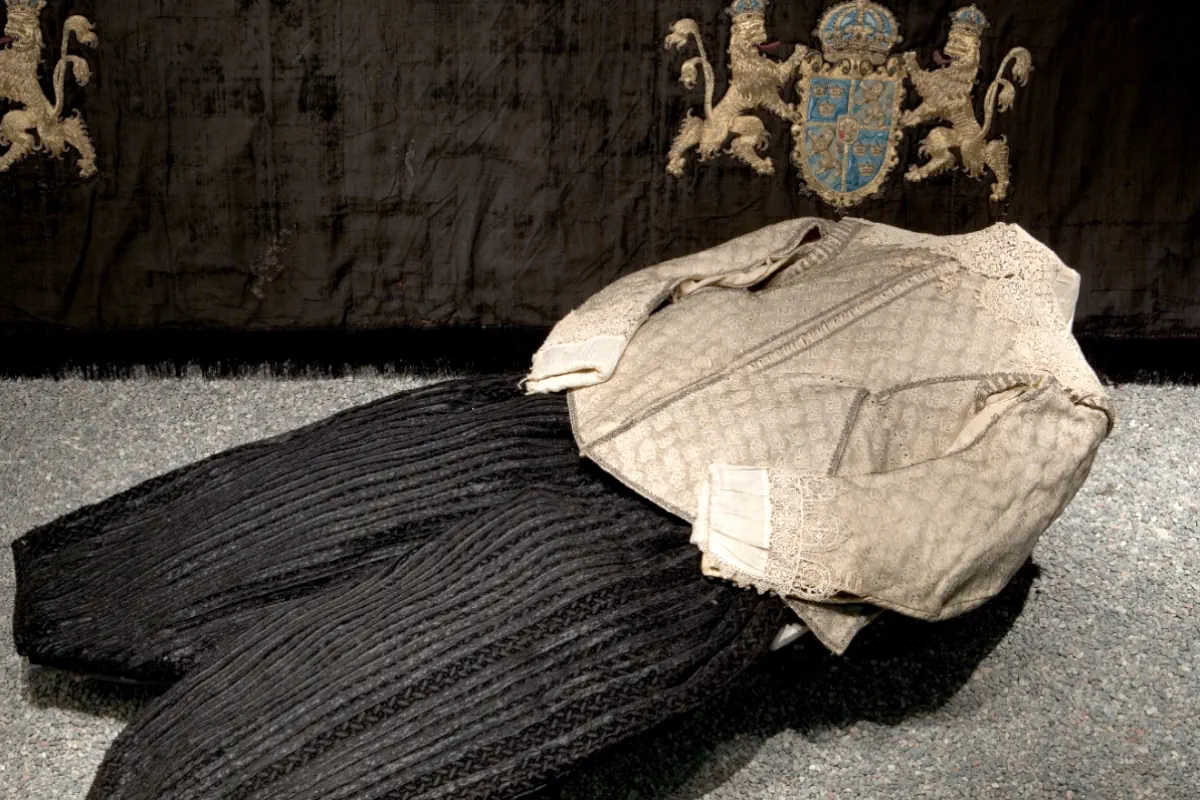
The museum’s most powerful displays are its costumes and relics connected to pivotal — and often tragic — chapters of Swedish history:
- 🩸 Gustav II Adolph’s Bloodstained Shirt: Worn during the Battle of Lützen (1632) in the Thirty Years’ War.
- 🎭 Gustav III’s Assassination Costume: The attire from the infamous 1792 masquerade ball at the Royal Opera.
- ⚔️ Karl XII’s Battle Uniform: The uniform he wore at his death in the trenches of Fredriksten, Norway (1718).


Royal Carriages and Ceremonial Splendor
In addition to armor and garments, the Royal Armoury displays beautifully preserved royal carriages used for coronations, weddings, and state ceremonies. These gilded vehicles, complete with intricate carvings and royal insignia, reveal the pageantry and spectacle of Sweden’s monarchy.
- Is the Royal Armoury free to visit? Yes, admission is free.
- Where is the Royal Armoury located? It is housed in the cellar vaults beneath the Royal Palace in Gamla Stan.
- What is the most famous object? Gustav II Adolph’s bloodstained shirt from the Battle of Lützen is one of the most iconic artifacts.
- How long should you plan for your visit? Most visitors spend 1–2 hours exploring the collections.
🧭 Nearby Attractions to the Royal Armoury
- 👑 The Royal Palace: Visit the Royal Apartments, the Treasury, and enjoy guided tours.
- ⛪ The German Church and Storkyrkan: Explore stunning medieval architecture and sacred art.
- 🏅 Nobel Prize Museum: Learn about Nobel laureates and the ideas that changed the world.
- ⚰️ Riddarholmen Church: The royal burial church of Swedish monarchs.
All of these sites are within walking distance, making Gamla Stan a compact hub of cultural and historical exploration.