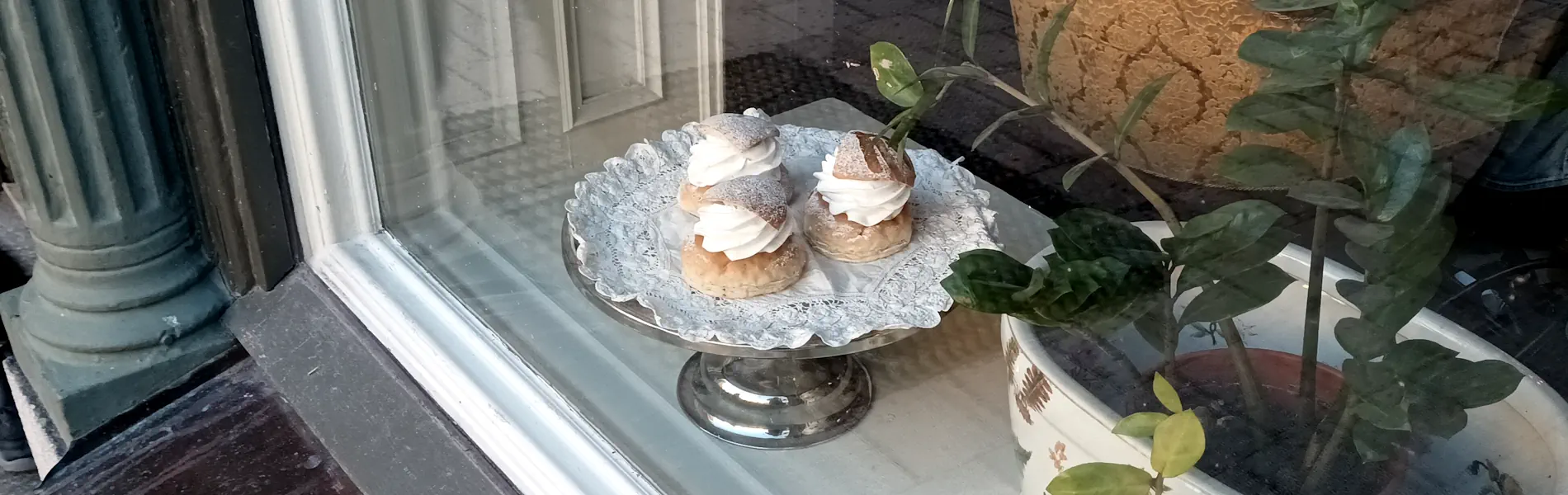
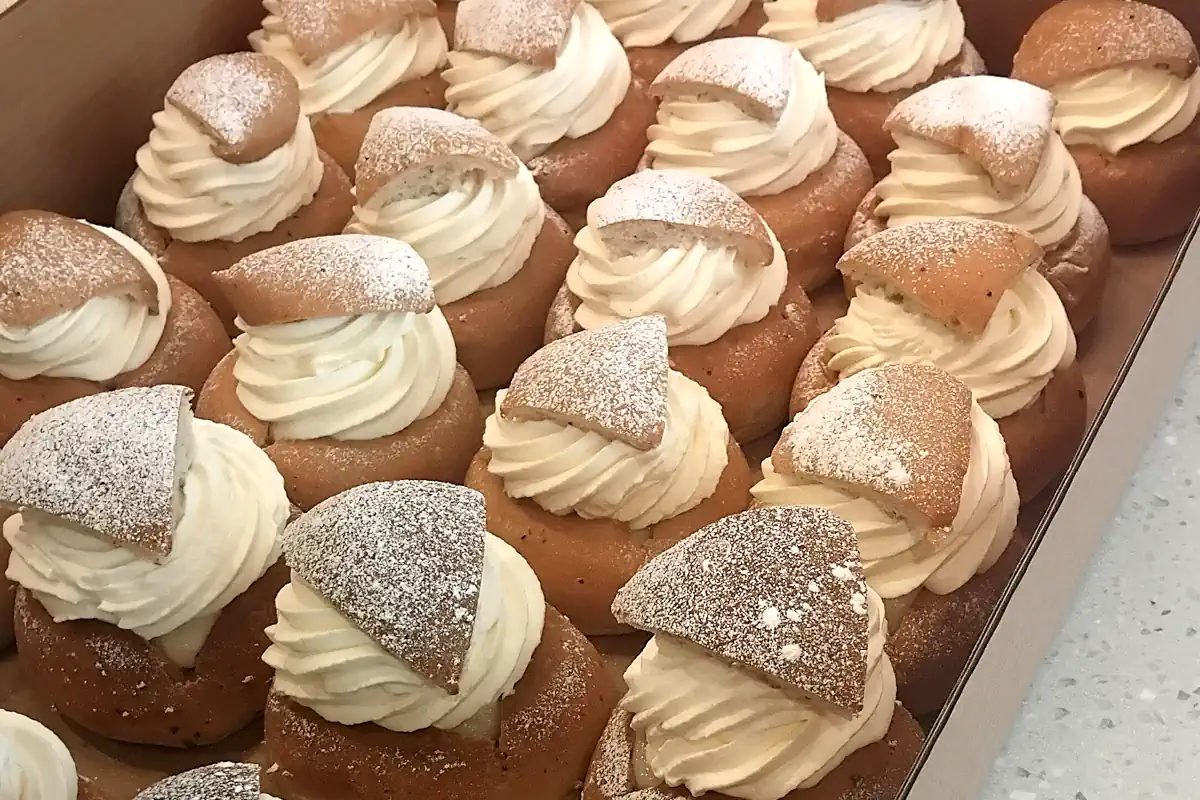
Semla is a traditional Swedish pastry associated with Fettisdagen (Shrove Tuesday). It consists of a cardamom bun filled with almond paste and whipped cream and holds a strong place in seasonal Swedish food culture.
Semla: Sweden’s Iconic Pastry Tradition
Every winter in Sweden, cafés and bakeries fill their windows with one irresistible treat—the semla. More than just a pastry, the semla is a cultural ritual that blends history, religion, and culinary creativity. Loved by locals and visitors alike, this cardamom-scented bun has become one of Sweden’s most cherished traditions.
📅When Is Fettisdagen 2026?
👉 In 2026, Fettisdagen (Fat Tuesday) falls on February 17. This is the traditional day when Swedes enjoy semlor before the Lenten season begins — and bakeries often sell out early.
🍰 What is a semla?
A semla is a soft, lightly spiced wheat bun filled and decorated with indulgent layers:
Cardamom-infused bun, golden and fluffy
Sweet almond paste (mandelmassa) nestled inside
A swirl of whipped cream crowning the filling
A dusting of powdered sugar on the lid
Traditionally enjoyed in a bowl of warm milk (“hetvägg”)
The semla dates back to the Middle Ages, when it was eaten on Fettisdagen (Shrove Tuesday) as a final indulgence before Lent. Over time, it evolved from a simple bun into the decadent cream- and almond-filled dessert we know today.
🍰 Modern semla culture
What was once a one-day indulgence is now an entire season of sweet celebrations:
An estimated 40–50 million semlor are sold in Sweden each year — making it one of the country’s most beloved seasonal pastries.
On Fettisdagen alone, several million semlor are consumed across Sweden.
Bakeries begin selling them shortly after Christmas, and the season often lasts until Easter.
Varieties range from classic to creative—think chocolate semla, princess cake semla, or even semla wraps
Enjoyed during fika, Sweden’s coffee break tradition
👑A Royal Ending
Legend has it that King Adolf Frederick of Sweden died in 1771 after indulging in a grand feast that ended with multiple semlor. His extravagant appetite—and fondness for the cream-filled buns—gave rise to the tale that he quite literally ate himself to death. Today, the story remains a quirky footnote in Sweden’s culinary folklore.
🥐 Semla Season in Stockholm
In Stockholm, semla season is almost competitive. Bakeries unveil their versions weeks before Fettisdagen, and newspapers publish annual rankings of the city’s best semlor. From classic cardamom buns to innovative reinterpretations, Stockholm embraces semla culture with enthusiasm every winter.
☕ Where to enjoy a semla
If you’re in Stockholm or anywhere in Sweden during winter, sampling a semla is a must:
Every café and bakery will have their own version
Seek out both traditional recipes and creative reinterpretations
Pair it with strong Swedish coffee for the perfect fika
The semla isn’t just a dessert—it’s a seasonal celebration. From its medieval roots to modern creative twists, this pastry carries centuries of history in every bite. Whether enjoyed the traditional way with warm milk or as part of a cozy café break, the semla is an unforgettable taste of Swedish culture.
❓Semla FAQ
When is Fettisdagen 2026? Fettisdagen (Fat Tuesday) falls on February 17, 2026.
Why do Swedes eat semlor? Traditionally, semlor were enjoyed before Lent as a final indulgence. Today, they are a beloved winter tradition.
What is inside a semla? A soft cardamom bun filled with almond paste and topped with whipped cream and powdered sugar.
Visit Info
Semla
Semla
ℹ️ Other Info
Visit Stockholm during semla season to experience this delightful pastry in its many forms, paired perfectly with Swedish coffee.